Last updated November 20, 2026
 Raised-panel steel
 Carriage house
 Modern flush
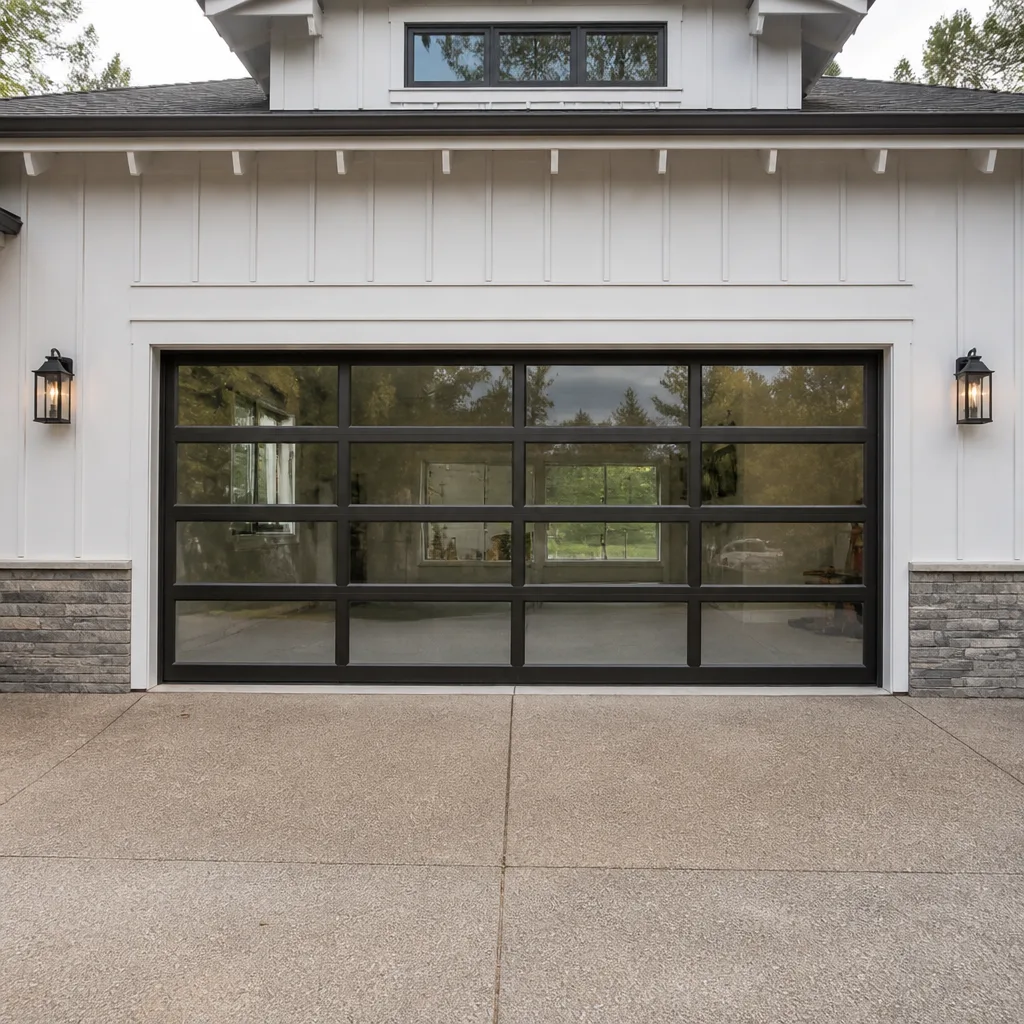 Full-view glass
 LiftMaster openers
 Chamberlain openers
Full 25-point door and opener safety check with every visit - springs, cables, rollers, tracks, and your LiftMaster or Chamberlain opener included
You get a price before we start. It does not change when the pro arrives.
Get your free estimateGarage Door Warning Signs: A Fountain Square Homeowner’s Reference Guide
Opening a garage door sounds routine until it isn’t. Most homeowners assume a reversing door means a sensor needs adjusting, so they poke at the photo-eye, mop the floor, and move on. What they often miss is a spring that’s lost tension and is now days from failing while the car is inside. Warning signs aren’t isolated symptoms; they’re failure sequences playing out on a timeline. This guide maps each sound, sight, and behavior to its likely root cause and the real urgency behind it, so you can tell the difference between a door that needs a technician this week and one that needs you to stop using it right now. We’ve written it from inside Fountain Square, where tight lots and older housing stock make ordinary garage door wear a little harder to spot.
Quick Answer
A garage door that reverses before reaching the floor is usually a spring tension or balance problem, not a sensor fault, and it can strand your car within days. Most warning signs fall into two groups: sounds (grinding, squealing, popping) that point to a specific worn component, and behaviors (slow operation, jerking, reversing) that signal mechanical strain. Popping from above, a visible gap in a spring, or a door that won’t stay open unassisted means stop using it immediately. Speeding up, new noises, or a door that won’t close fully means schedule a repair soon, before the door refuses to cooperate at all.
Styles & brands we work with
- Raised-panel steel
- Carriage house
- Modern flush
- Full-view glass
- LiftMaster openers
- Chamberlain openers
Table of Contents
- Understanding the Failure Sequence: There’s a Clock on Every Symptom
- Your Warning-Sign Timeline: Repair Now or Stop Using the Door
- Reading Your Door by Sound: Grinding vs. Squealing vs. Popping
- What Cables and Springs Are Telling You
- Why Slow Operation Is a Serious Warning
- Reversing, Jerking, and the Sensor Misconception
- Matching Signs to Their Likely Root Causes
- How to Document Symptoms Safely (and Speed Up the Fix)
Understanding the Failure Sequence: There’s a Clock on Every Symptom
A garage door fails in stages, and most warning signs are simply visible markers of which stage you’re in. The problems all start small: a stretched spring, a loose drum, a worn roller, a cable fraying strand by strand. Left alone, each one compounds – a spring loses tension, the opener works harder to compensate, the motor strains, the chain or belt slips, and eventually the whole mechanism stops cooperating. The sign you’re seeing is one frame of that story. What matters is knowing which frame.
In Fountain Square, we see this play out with particular regularity. Many homes here have garages tucked behind the house on narrow alleys, with short driveways and low clearance. Doors on those garages take a lot of cycles because people use them as their main entry point, opening and closing multiple times daily rather than a few times a week. That means spring and cable wear accumulates faster than it will on a suburban garage used only for storage, and symptoms that would take months to worsen elsewhere can sharpen quickly. Our technicians have up to 12 years of experience reading exactly these patterns.
Here’s the key insight the rest of this guide builds on: urgency isn’t about how bad the sign sounds. A quiet grinding can be far more advanced than a loud squeal. The question is whether the component behind the sign is already holding load, already failing, or still in the early stages of wear.
Your Warning-Sign Timeline: Repair Now or Stop Using the Door
You don’t need to diagnose the specific part yourself. You need to know which category the symptom falls into. Here’s the plain-language breakdown we use as a first filter.
Stop using the door immediately if:
- You hear a loud bang or snap from above the door and the door drops or hangs unevenly.
- You can see a visible gap or break in a torsion spring above the door, or a stretched, gapped extension spring alongside the track.
- The door won’t stay open when you lift it by hand and won’t hold its position on the way down.
- A cable has visibly come off its drum or is hanging slack, or you can see bare, frayed strands.
- The door falls shut faster than you can guide it, or drops the last few inches without control.
Schedule a repair soon (days, not weeks) if:
- The door reverses before hitting the floor, or the opener refuses to push it down without being held.
- Operation has slowed noticeably over several days rather than being consistently slow.
- The door jerks, hesitates, or stalls partway through travel.
- New grinding, squealing, or popping has started and is getting worse.
- The opener reverses the door on its own or rams it into the floor as if trying to force it shut.
The middle category is where most panicked calls originate. Slow doesn’t always mean imminent danger, but it means a mechanical issue has already established itself. Our advice: if the door still cycles fully but sounds or behaves differently than it used to, book garage door repair before it graduates into the “stop using” category.
Reading Your Door by Sound: Grinding vs. Squealing vs. Popping
Notice where the sound comes from and how it changes with the door’s travel. That alone narrows the cause more than the sound’s volume does. We’ve assembled this diagnostic chart from years of working on LiftMaster, Chamberlain, and Raynor systems where homeowners reported the exact symptoms many times over.
| Sound | Where It Comes From | Likely Cause | Urgency |
|---|---|---|---|
| Grinding | Along the track or near a hinge | Worn rollers, loose or misaligned hinge screws, dry or rough tracks | Schedule soon – wear is spreading |
| Squealing | Rollers, hinges, springs, or the opener rail | Dry metal-on-metal movement; worn roller bearings | Schedule soon – usually low risk but easy to fix |
| Popping or snapping | Above the door, near the torsion shaft or springs | Spring failure, or a drum or cable losing tension | Stop using immediately |
| Squeaking that changes with weather | Rollers or hinges | Old lubrication or worn bearings | Low urgency, but worth a look |
| Banging at the end of travel | Opener head or limit | Opener travel limits set too long or too short | Schedule soon |
A note on that top row of the table: grinding is the most misdiagnosed sound we hear about. It gets blamed on the opener when the track or rollers are usually the real cause. A roller with a worn bearing drags and grinds through a full cycle, which puts real strain on the opener’s motor. Fixed early, it’s a roller swap. Fixed late, you’re often replacing the motor as well. That strain is also the reason a door that sounds fine for weeks can suddenly stop working entirely. If you’re not sure whether the issue sits in the door or the operator, our garage door opener repair service covers the diagnostic side so the right component gets addressed.
What Cables and Springs Are Telling You
Nothing on your garage door is more dangerous to inspect by hand than a spring or a cable under tension. Do your visual check from the floor with the door closed, at a normal standing distance. Never reach up to test a spring with your hand, and never touch a cable you suspect is slack or frayed. These parts carry the door’s full weight.
Here’s what to look for on a closed door, using plain terms:
- A spring with a visible gap. A torsion spring above the door is one long coil. If you can see a clear break or separation in that coil, the spring has failed and the door is being held up by whatever’s left. On extension springs that run along the track, look for stretched-out coils clustered to one end rather than spread evenly, or coils touching each other.
- Cables crossing, hanging loose, or showing bare metal. A cable that has jumped its drum or is hanging slack is telling you tension is already gone, and the door is a step from dropping. Frayed strands that look like a fuzzy pipe cleaner near the drum are a worn-cable warning.
- A door that hangs at an angle. Stand back and sight along the bottom edge when the door’s partway up. One side higher than the other usually means a failing cable or a spring on one side that’s lost tension.
- Bent or worn hinges and rollers. Look for rollers that sit crooked in the track, or hinge plates pulling loose.
If you see any of the first three, stop using the door and call a professional. Spring and cable replacement is one of the most safety-critical garage door jobs there is, which is exactly the kind of work we specialize in. We connect you with technicians who handle garage door repair Fountain Square from the diagnostic stage onward, including the spring work most generalists decline to touch.
Why Slow Operation Is a Serious Warning
A door that runs slowly and sluggishly is more worrying than one that’s occasionally slow. That sounds backward, so let’s explain. Intermittent problems can come from an easy-to-source cause: a sensor catching a shadow, a broken limit switch, a loose wire. Consistent slowness almost always means a mechanical component is already fighting against the rest of the system. The drag is eating power every time the door moves, and it’s stressing the opener motor in the process.
The most common causes of steady, creeping slowness, in rough order of likelihood:
- A torsion spring that’s lost its tension and no longer helps lift the door. The opener now does the work the spring used to do.
- Worn rollers dragging in the track.
- A dry, rough lead-in on the tracks, or a track that’s been bent slightly out of alignment.
- An opener motor straining against a door that’s too heavy for it – common when a heavy older door in Fountain Square’s housing stock sits on a mid-range opener.
Here’s the part that surprises homeowners: your door’s spring does most of the actual lifting. When it’s fresh, the door should feel startlingly light to a technician holding it by hand with the opener disconnected. When it’s weak, the opener is quietly doing double duty. If your door is slow and the motor is warm to the touch after a cycle, that’s a spring or balance issue worth diagnosing before it shapes up as a failed opener. Our technicians have up to 12 years of experience checking spring balance by hand and can tell you within a couple of cycles whether the motor or the spring is the culprit.
Reversing, Jerking, and the Sensor Misconception
The most common call we take goes something like this: “The door goes down a foot and goes back up. I’ve cleaned the sensors twice.” Sensor problems do cause reversal, but on a spring-powered door, most reversal complaints turn out to be spring tension. A spring that’s lost enough tension can’t hold the door’s weight in place, the door sags slightly despite the opener, the operator reads the sag as an obstacle, and it reverses to be safe. So the door does exactly what it was designed to do, and the photo-eyes get the blame.
How to tell the difference? Here’s a quick walk-through that avoids any hands-on work with springs or cables:
- Close the door fully by hand from the floor. Does it swing or drift on its own, or settle unevenly?
- Check that the photo-eye lenses on both sides point squarely at each other with nothing in the beam.
- Confirm the beam itself: stand in the doorway with the door closed and press the wall button once. If the opener beeps or blinks and refuses to run, the sensor circuit is the issue.
- If the sensors check out but the door still reverses on a consistent trip, spring tension or a limit setting is now the top suspect. That’s a technician call.
Jerking and hesitating during travel is a cousin of the same problem. A door that catches, hitches, and then lurches forward is fighting worn rollers, a bent track section, or a spring on one side losing tension. In Fountain Square, older single-car garages with slightly settling foundations occasionally show this as a track out of alignment. That’s a mechanical alignment job, but it starts with a proper diagnosis. On modern operators from LiftMaster or Chamberlain, a jerking door can also trip the opener’s safeties. If a LiftMaster or Chamberlain opener keeps reversing or flashing error codes, it’s usually reacting to something on the door itself rather than being broken. That’s why our opener repair starts with the door, not the button.
Matching Signs to Their Likely Root Causes
Here’s the mapping we come back to again and again, simplified so you can hold it in your head. This isn’t a substitute for a technician’s look, but it’s enough to book the right visit and describe the issue in a way that helps diagnosis.
| Symptom You Notice | Probable Root Cause | What It Usually Means |
|---|---|---|
| Loud bang, then door drops unevenly | Torsion or extension spring failed | Stop using the door; spring replacement needed |
| Grinding through travel | Worn roller bearings or hinge screws | Repair soon; roller replacement is straightforward |
| Squealing during open or close | Dry metal contact; worn bearings | Repair soon; often a simple lubrication and roller job |
| Door slows down steadily | Spring lost tension; motor compensating | Repair soon; check spring before replacing the opener |
| Reverses before floor contact | Spring tension loss or limit setting | Diagnose within days; can strand your car |
| Jerks and stalls mid-travel | Worn roller, bent track, or cable wear | Repair soon; track the unevenness by watching the door edges |
| Door doesn’t hold on the way down | Cable or spring under failure | Stop using the door; this is a hands-off situation |
| Opener strains but door barely moves | Door weight exceeds opener; spring or balance issue | Repair soon; the opener is overheating in the meantime |
If the sounds and behaviors don’t match this table cleanly, don’t force a diagnosis. Some combination problems – a worn roller plus a weak spring, a misadjusted limit plus a dragging track – present as a single symptom that resolves only when the whole mechanical picture is checked. If you’ve had a door installed or serviced by a previous homeowner, a Wayne Dalton or Raynor door with a newer operator can also show quirks that are brand-specific. We work on those all the time, and the mapping approach still applies.
How to Document Symptoms Safely (and Speed Up the Fix)
The more precise you can be before a technician arrives, the faster the diagnosis and the more accurate the quote. You don’t need to know the names of any parts. You need to record what the door is doing, without putting yourself in the path of the door or reaching for any moving component. Here’s the routine we recommend to Fountain Square homeowners who’ve noticed something off.
- Take a video of a full open and close cycle. Film from the side, at a slight angle, standing well back from the door. That angle shows the door’s mounting on both sides and makes a misaligned track or hanging edge obvious.
- Photograph both springs from the floor on a closed door. Don’t climb on anything. Take one photo of the shaft above the door and one per track where the spring, cable, and drum assembly sit.
- Note the timing. Write down how long the door takes to open fully and to close fully. Compare against what you remember from when it was fine. A measurable slowdown is worth mentioning.
- Record the exact conditions that bring on the problem. Does it reverse only at night? Only after the door has sat closed for a while? Only in cold weather? Cold mornings are a common trigger in Fountain Square’s winter months, when a weak spring loses even more tension.
- Write down your door and opener brand and model if you can find the sticker. The opener head usually carries a LiftMaster, Chamberlain, Craftsman, or Genie label. If you’re not sure, a photo of the label works.
All five pieces together give a technician enough to plan the visit, and often enough to bring the right parts the first time. That’s a real advantage when a repair can be a same-visit fix rather than a two-visit job. If you’re also thinking about a new door down the road, a door that’s been giving you warnings for a while is a good candidate for garage door installation rather than another round of repairs. That’s an easy conversation to have once the current issue is understood.
Common Mistakes to Avoid
- Blamming the sensor for every reversal. On spring-driven doors, spring tension is the likelier culprit. Cleaning or repositioning the photo-eyes repeatedly wastes time and leaves the real issue getting worse.
- Greasing the tracks. Track lubricant collects grit and turns into a grinding paste. Lubricate the rollers, hinges, and springs only; tracks stay dry.
- Ignoring a popping sound because the door still works. The door working after a spring break is the dangerous window, not proof it’s fine. A broken spring on one side often leaves the door cycling until the next failure.
- Trying to balance the door yourself. A torsion spring holds enormous potential energy even in a closed door. Adjusting it is a trained job; leave it to the technician.
- Replacing the opener when the door is the problem. A stubbornly slow or reversing door blamed on the operator usually turns out to be a spring, roller, or track issue. Replacing the motor first just delays the real fix.
- Forgetting that cold weather exposes a weak spring. A door that was fine all summer and starts acting up in the first cold weeks of winter is showing you a spring at the edge of its range, not a random malfunction.
- Assuming a quiet door is a healthy door. A door that’s silent but heavy, slow, and warm-motor after a cycle is quietly telling you something mechanical is straining. Sound is only one of the signs.
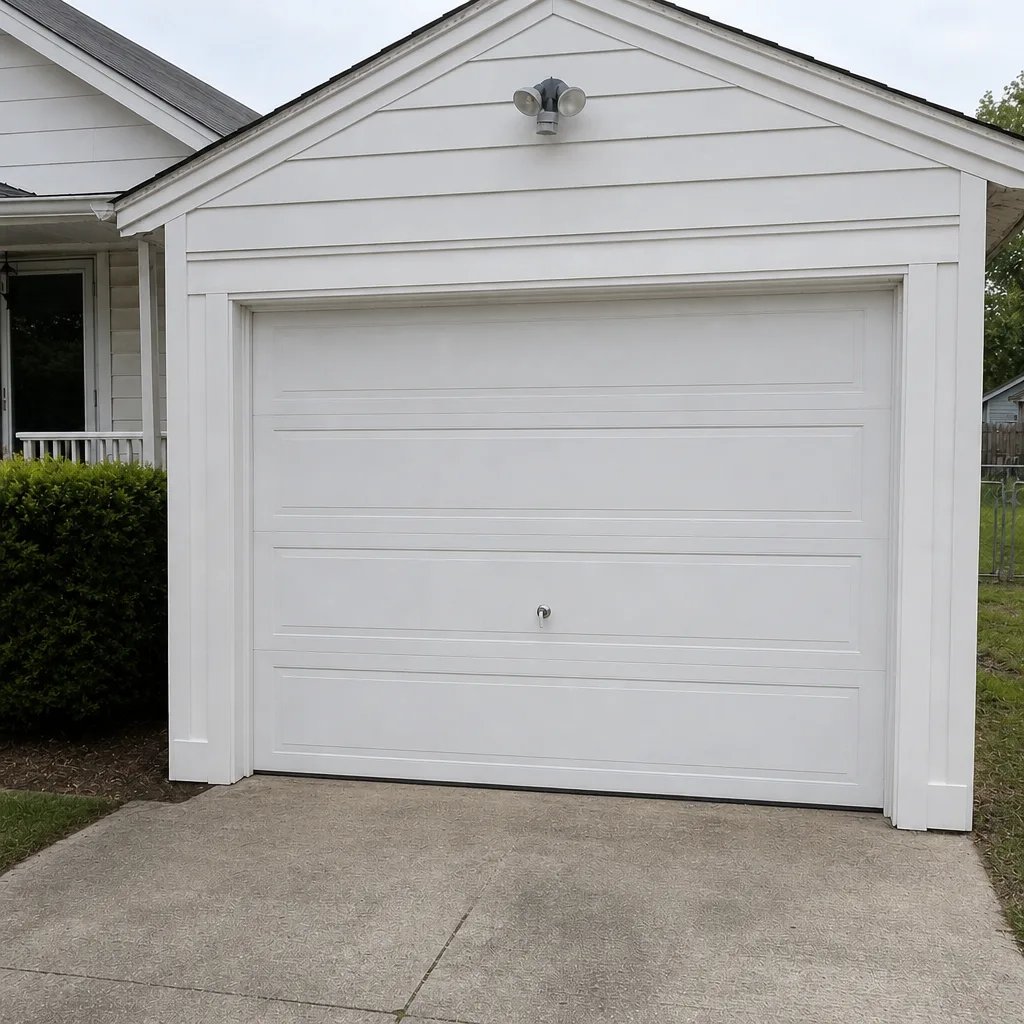
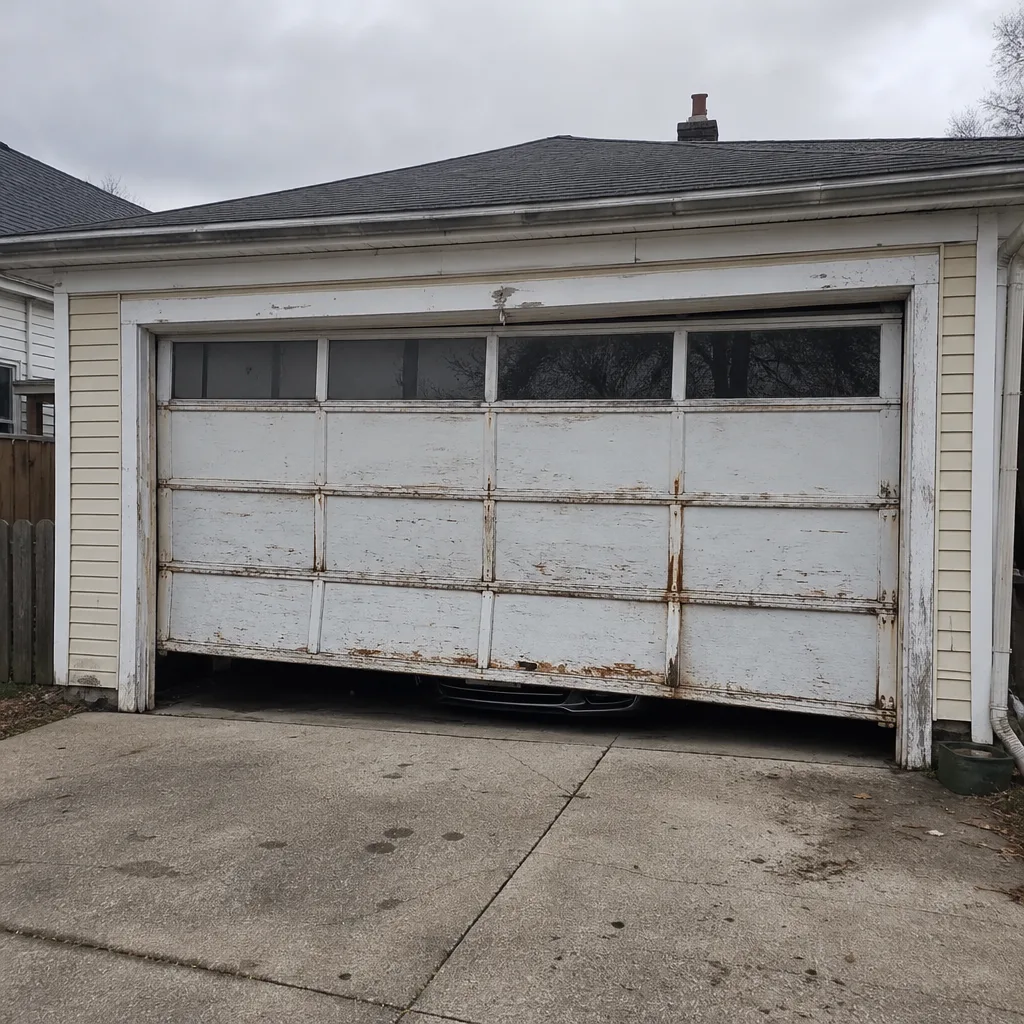
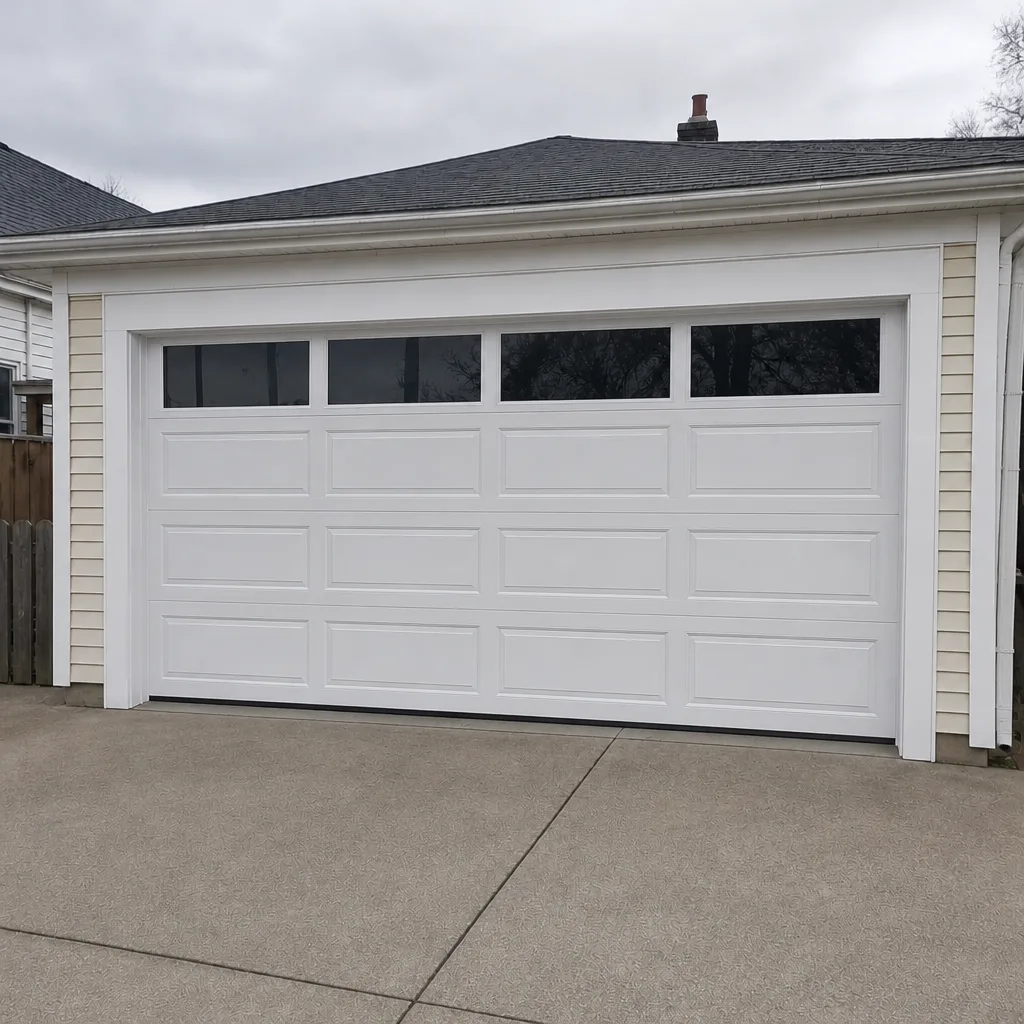
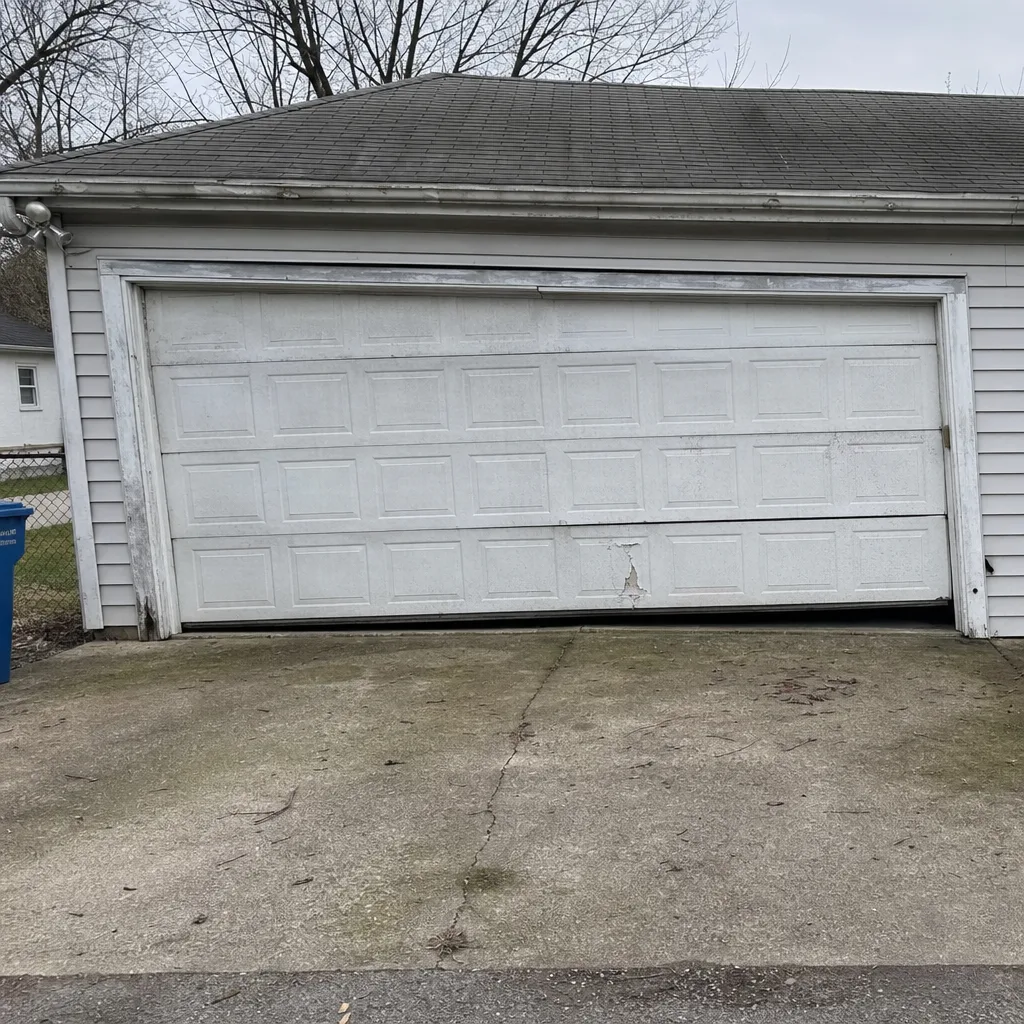
See the difference
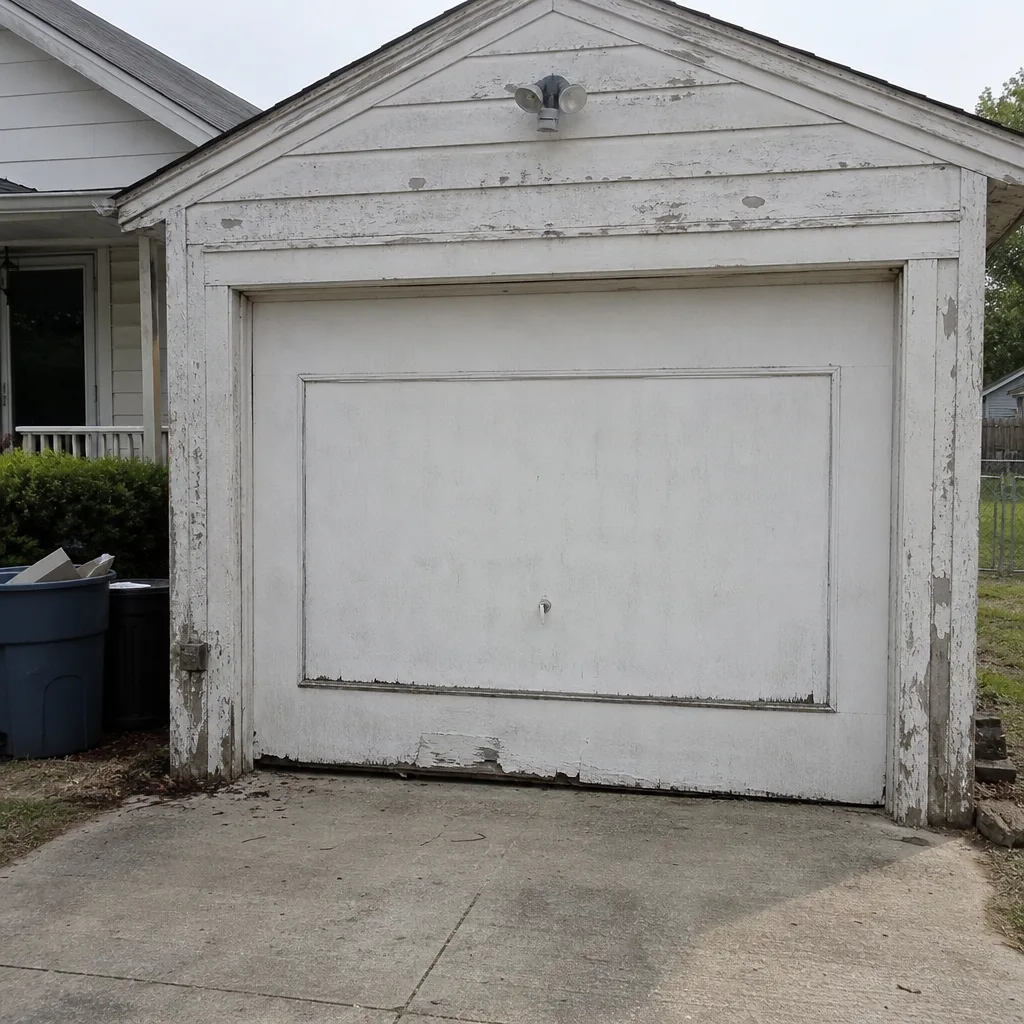 Before
 After
 Before
 After
 Before
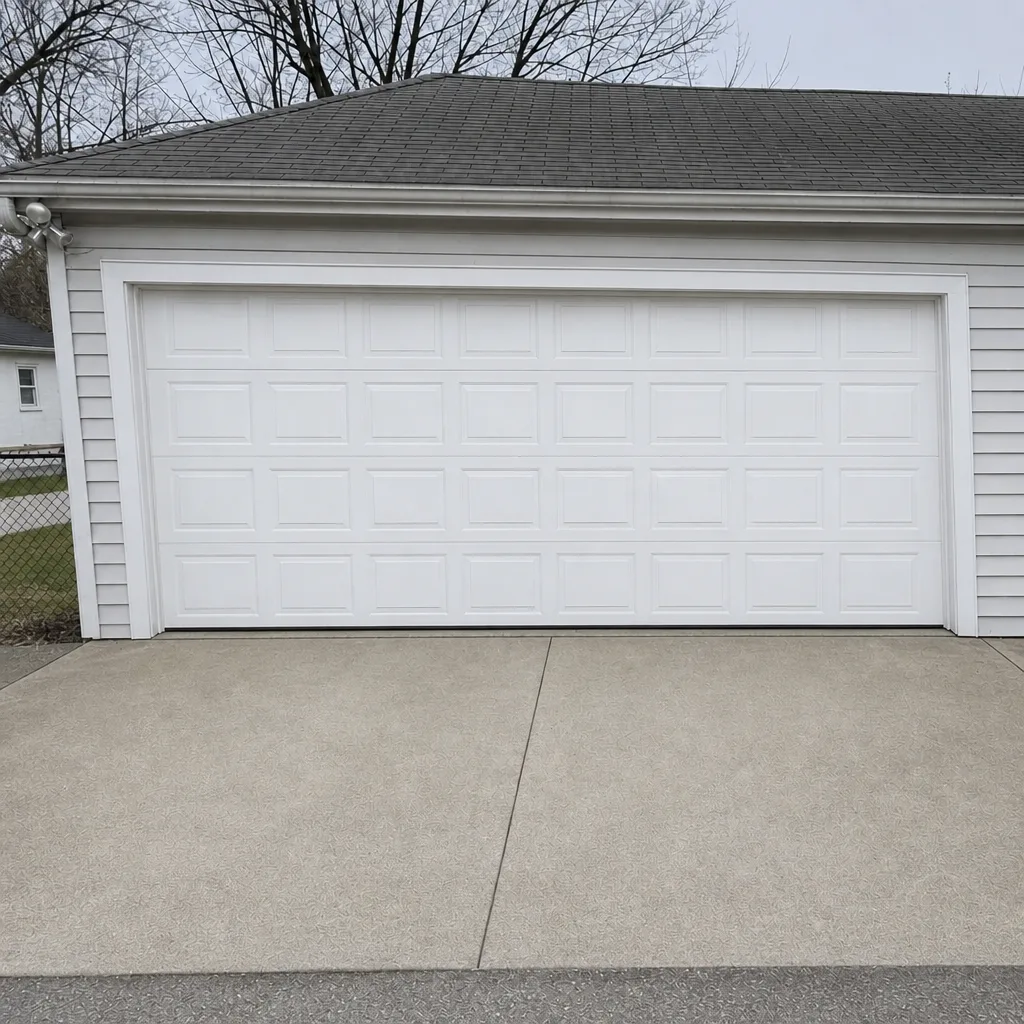 After
When to Call a Professional
Call a professional the moment you see any of the “stop using” signs above: a broken spring, a slack or frayed cable, a door that won’t hold, or a loud bang from above. Also call if you see a persistent pattern of reversing, jerking, or slowing over several cycles, because these usually trace back to a mechanical cause that needs a proper look. And call if you’re simply not sure. A trained eye on a door that’s behaving unusually can save you from a much larger repair, and our technicians have up to 12 years of experience diagnosing exactly these symptoms across all major brands.
Garage Door Repair Fountain Square offers free estimates in Fountain Square. Call (877) 335-6376 to book a diagnosis and get a clear answer on what you’re dealing with. The price is quoted and agreed before any work starts, so you’ll know the number before the technician picks up a tool.
Frequently Asked Questions
Garage door repair in Fountain Square typically ranges from around $150 for a straightforward roller or hinge swap to roughly $400 for a spring replacement, with most visits landing somewhere in the middle. Opener repairs tend to run from around $120 to $350 depending on the part. These are typical estimates, not a quote; the written estimate you receive after diagnosis sets the final price, and no work starts before you agree to it. Call (877) 335-6376 for an exact quote – estimates are free.
We do same-day service for urgent repairs, and the fastest way to get that moving is to call (877) 335-6376 with a description of what the door is doing. Tell us whether the door is stuck open or closed, whether you heard a bang, and what brand your opener is if you know it. That information helps route the right technician faster. Estimates are free, and most urgent issues get addressed the same day.
A single torsion spring replacement typically runs $180 to $340 in Fountain Square estimates. If your door has two springs, both are usually replaced at the same time as a matched pair, so the pair costs roughly twice the single-spring estimate. Replacement is a two-spring job far more often than an emergency homeowner expects, which is why it’s worth getting an exact price up front. The quoted range is an estimate only; the written estimate is the price, and it’s agreed before any work begins. Call (877) 335-6376 to book a free estimate.
An estimate is meant to hold, and we quote before we touch anything. If a technician finds something the initial description didn’t reveal, it gets explained and agreed before any additional work proceeds. That’s true for a simple roller replacement or a full opener repair. Call (877) 335-6376 if you want a clear answer before committing.
The local pro we connect you with is licensed and insured as their state requires. We specifically work on residential garage doors and openers, from repair and spring work to full installations, and we’re brand-fluent across LiftMaster, Chamberlain, Genie, Clopay, Amarr, Wayne Dalton, Craftsman, and Raynor. That focus is why we can handle the safety-critical spring work many generalists won’t. Call (877) 335-6376 for an estimate.
A freshly broken spring or a slack, frayed cable is the most dangerous warning sign on a garage door. Both mean the door’s weight is no longer fully held, and the door can drop without warning. Stop using the door and keep hands clear of the springs and cables. Don’t try to lift the door or test it by hand. Call (877) 335-6376 and describe what you’ve seen; estimates are free and safety is the first priority.
The Bottom Line
Garage door warning signs aren’t a list of annoyances to ignore; they’re the visible part of a sequence with a timeline attached. Noise tells you which component is wearing, slow operation usually means a spring or balance problem already in progress, and the “stop using” signs – broken springs, slack cables, doors that won’t hold – mean hands off and call now. Documenting symptoms with a short video and photos helps a technician diagnose accurately and quote correctly the first time. Here in Fountain Square, our technicians have up to 12 years of experience reading exactly these patterns across every major brand. The earlier you call, the more options you have.
Call (877) 335-6376 for a free estimate. We’ll diagnose the warning sign, explain the cause in plain terms, and give you a written price before any work starts. One call covers repair, spring work, openers, and installation when it’s time for a new door.
Written by the team at Garage Door Repair Fountain Square.