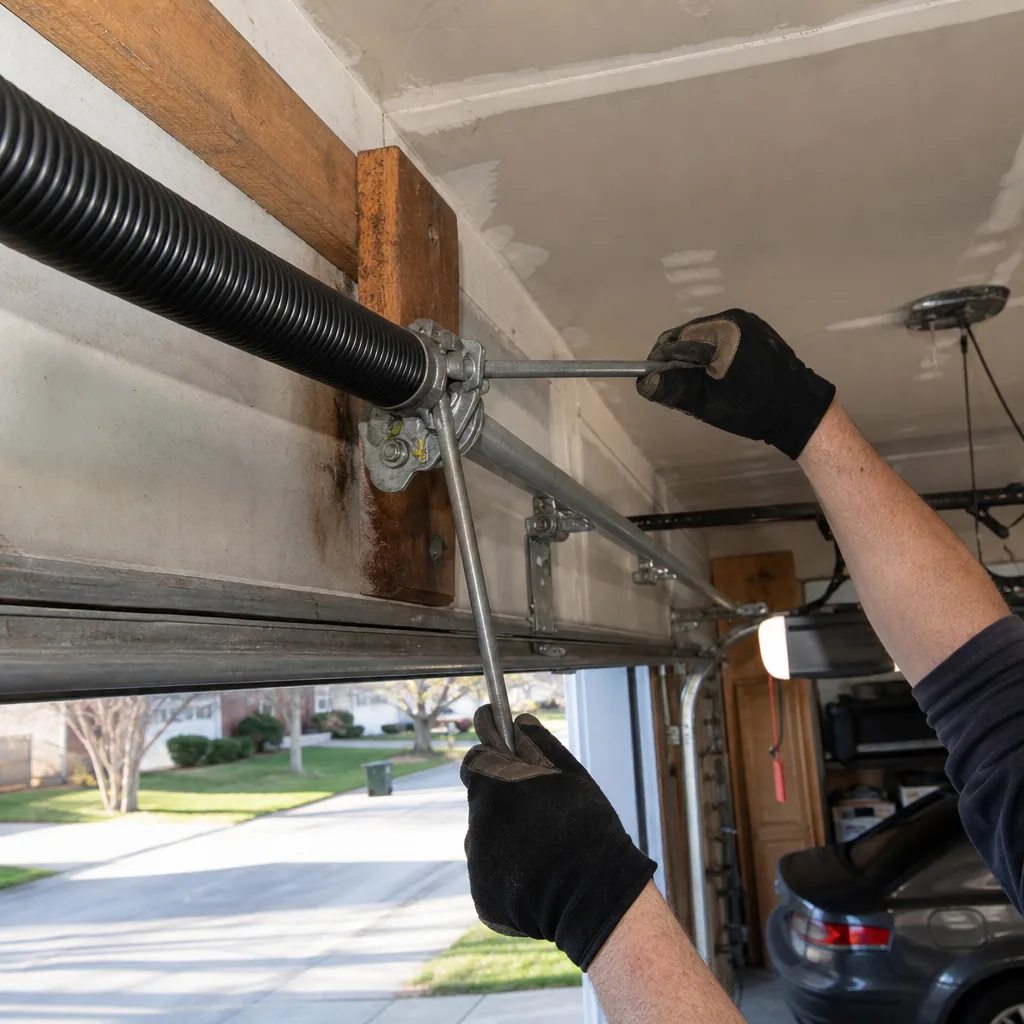
Last updated November 20, 2026
 Raised-panel steel
 Carriage house
 Modern flush
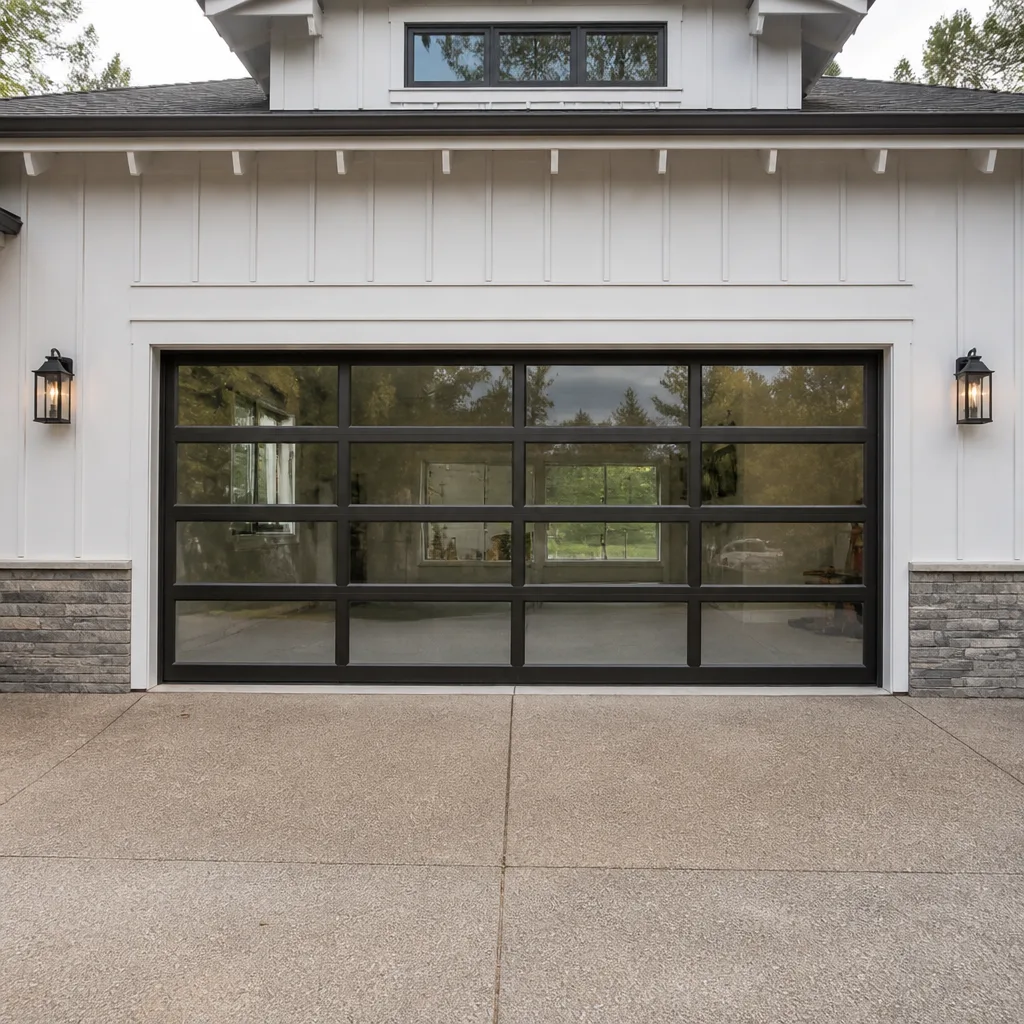 Full-view glass
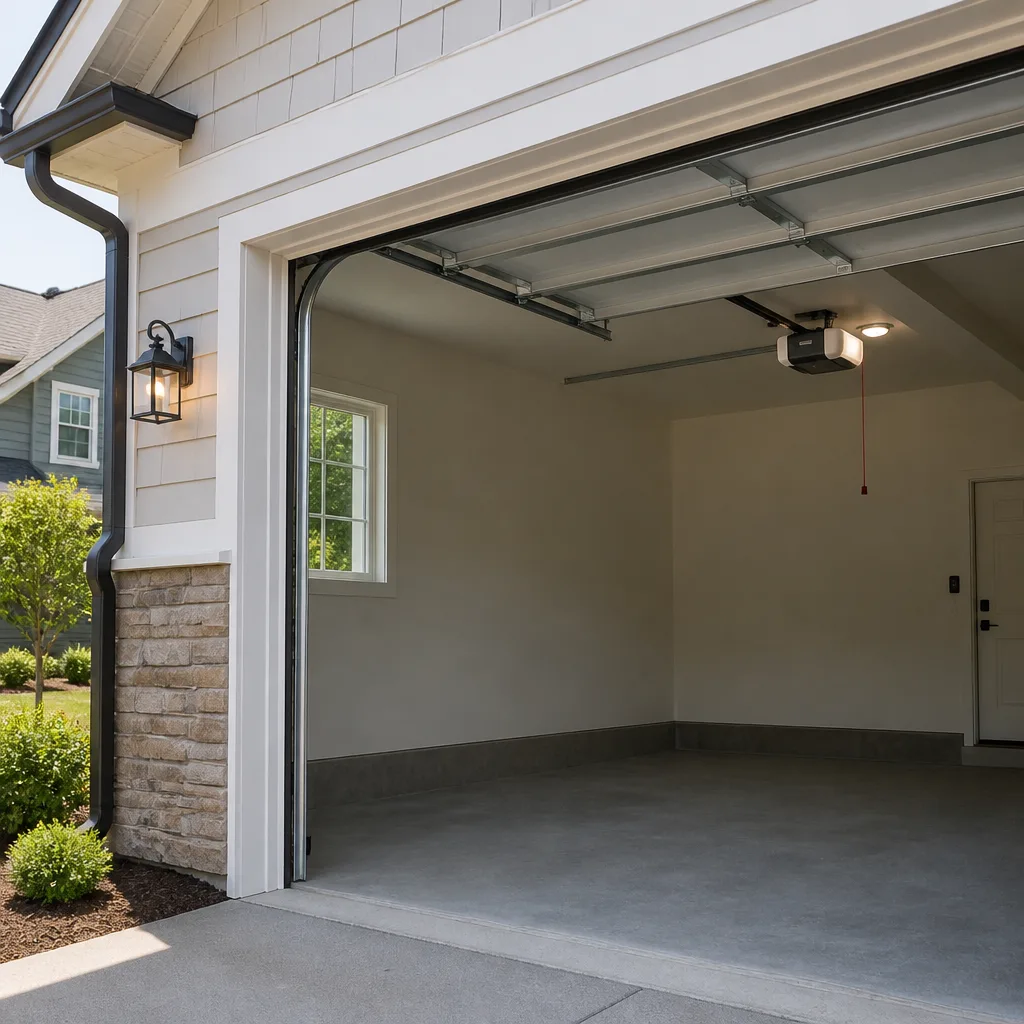 LiftMaster openers
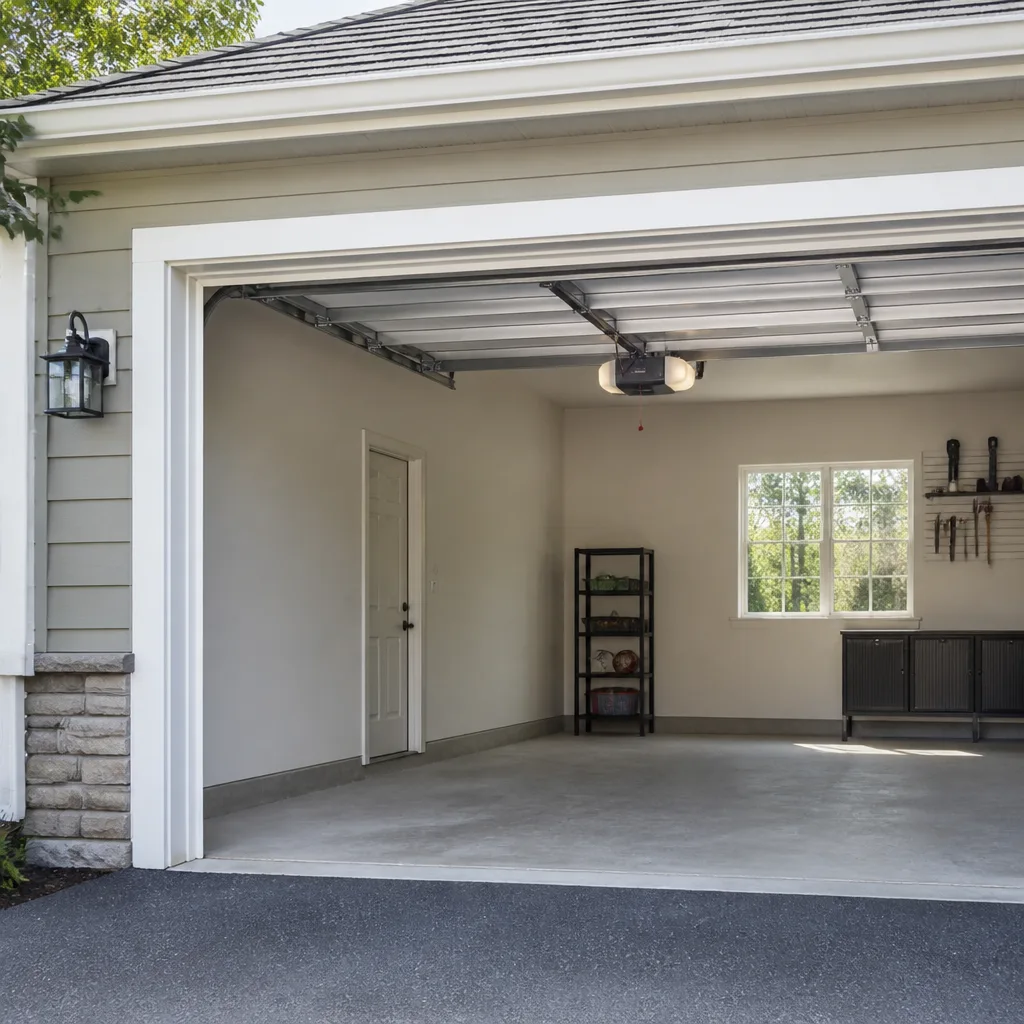 Chamberlain openers
Full 25-point door and opener safety check with every visit - springs, cables, rollers, tracks, and your LiftMaster or Chamberlain opener included
You get a price before we start. It does not change when the pro arrives.
Get your free estimateDIY vs Professional Garage Door: The Fountain Square Homeowner’s Decision Guide
Most DIY-versus-pro debates get the question wrong. They ask whether you’re handy enough, when the real question is whether the task can hurt you if it goes sideways. A torsion spring stores enough energy to throw a winding bar through drywall at speed, and the tutorial video showing you how to adjust one rarely mentions the emergency-room visits behind safety warnings about spring work. Some garage door jobs are genuinely homeowner-safe. Others are no-touch regardless of how many tools you own. This guide draws that line task by task, with honest parts-versus-installed math, so a capable Fountain Square homeowner knows exactly what to attempt and exactly where to stop.
Quick Answer
Most garage door tasks split cleanly into three groups: safe for a careful homeowner (lubrication, weather seals, visual inspections, testing the safety reverse), doable but tool-limited (roller and cable replacement, track adjustment), and no-touch no matter your skill level (torsion and extension springs, opener capacitor and high-voltage work). For the five most common repairs, the parts usually run $15 to $120 while the installed job runs $150 to $450, and spring work is worth every dollar of the difference. If your door involves stored spring energy, call (877) 335-6376 for a free estimate.
Styles & brands we work with
- Raised-panel steel
- Carriage house
- Modern flush
- Full-view glass
- LiftMaster openers
- Chamberlain openers
Table of Contents
- The Three-Tier Risk Test: Sorting Every Job Before You Touch a Tool
- Why Springs Are Categorically Different (Torsion and Extension Both)
- The Honest Math: Parts Cost vs. Installed Cost for the Five Most Common Repairs
- The Tools That Decide the Job for You
- How Fountain Square’s Older Garage Structures Change the DIY Math
- Which DIY Mistakes Void Manufacturer Warranties and Which Affect Insurance
- Opener Work: What You Can Pair and Program, and What You Can’t
- The Safe DIY Shortlist: Jobs Worth Doing Yourself
The Three-Tier Risk Test: Sorting Every Job Before You Touch a Tool
Before you watch a single video, sort the job into one of three tiers. This is the fastest way to make a sane decision, and it works whether your door is a Clopay, a Wayne Dalton, or something older you can’t identify. The tier isn’t about your confidence. It’s about what happens if a part slips.
Tier 1: Homeowner-Safe
- Lubricating hinges, rollers, and tracks with a proper garage-door lubricant
- Replacing the bottom weather seal or threshold
- Cleaning photo-eye lenses and testing the safety reverse
- Balancing the door by hand (lift halfway, let go, watch whether it stays)
- Tightening loose hinge and bracket bolts with hand tools
None of these put you near stored energy or line voltage. A careful homeowner with basic hand tools can do all five.
Tier 2: Doable But Tool-Limited
- Replacing nylon rollers (needs the door supported and the right size roller)
- Straightening or re-bending a lightly dented track (needs a proper bending bar and patience)
- Replacing a cable that has already lost tension on a door propped correctly (needs C-clamps and cable knowledge)
These are where most DIYers get in over their heads, not because the task is intellectually hard but because they don’t own the clamps, bars, or winding tools. If you have to buy specialty tools to do it once, the math rarely works.
Tier 3: No-Touch
- Torsion spring adjustment or replacement
- Extension spring replacement
- Opener capacitor replacement and any high-voltage wiring
- Cable replacement on a door still under spring tension
Tier 3 is the line. It doesn’t move based on skill. It moves based on physics. Call (877) 335-6376 before you start any of them.
Why Springs Are Categorically Different (Torsion and Extension Both)
Torsion and extension springs both store the energy that lifts your door, and both are no-touch jobs. They differ in how that energy lives inside the metal and how it releases when something fails. They do not differ in whether you should work on them.
A torsion spring is a coiled steel bar mounted on a shaft above the door, wound tight during installation. The energy it stores is enormous, and when a torsion spring fails it releases instantly, often with a loud bang and a door that drops. An extension spring stretches along a track at the sides and can also let go violently, sending hardware flying. In our experience, the failure mode is what surprises homeowners: torsion springs often break while the door is closed, extension springs can break while opening, and neither gives warning.
Here’s the honest comparison. In both systems, a trained technician uses winding bars, correct clamps, and a specific release-and-rewind sequence that takes years to master. The number one mistake we’ve seen is a homeowner who watched a video and assumed the difficulty was visual. It isn’t. The bars are holding back stored energy the whole time.
This is why spring repair sits explicitly in our scope as a specialist trade service. It’s also the job we most strongly steer homeowners away from. If you’re hearing a loud bang from the garage or your door suddenly won’t lift, stop. Call a professional before you go near the springs. Estimates are free.
The Honest Math: Parts Cost vs. Installed Cost for the Five Most Common Repairs
The most common comparison is misleading because it only counts the part. Real math counts the part, the tool, your time, and the risk. Here’s how the five most common garage door jobs break down, using typical estimated ranges for the Fountain Square market. The written estimate from the local pro sets the final price.
- Broken torsion spring (one spring, parts): $30 to $60. Installed: $180 to $340. A matched pair is usually replaced together, so a pair runs about twice the single-spring cost.
- Broken extension spring (one, parts): $20 to $50. Installed: $150 to $280.
- Roller replacement (full set of 10 to 12, parts): $15 to $35. Installed: $150 to $250.
- Lift cable replacement (one cable, parts): $15 to $40. Installed: $150 to $280.
- Safety reverse adjustment or opener sensor fix (parts): $15 to $60. Installed: $120 to $250.
The gap between parts and installed cost is the whole story. Spring work carries the largest gap because the labor is the dangerous part, and the tooling is real. Roller and cable work sit at the middle tier. Sensor and adjustment work is often the cheapest installed job because the diagnosis is quick for a technician and slow for a homeowner.
What you should also know: a same-visit fix is possible when the technician’s truck has the part. That’s the difference between a $15 roller job you finish tonight and a $15 roller job that sits in a box because you ordered the wrong size. One call covers it all on that front. Call (877) 335-6376 for an exact quote on your job.
The Tools That Decide the Job for You
Most DIY garage door jobs fail on tools, not skill. Before you commit, check the job against this list. If you can’t check every box, the job belongs to a professional.
- Correct-size winding bars (for torsion springs). If you don’t own them and don’t know the correct size for your door, you can’t do the job safely.
- Two heavy-duty C-clamps or locking pliers. Needed to hold the door in place under tension for cable or roller work.
- A bending bar and a mallet. Track straightening is a feel job, and a crescent wrench won’t do it.
- A socket set with the correct deep sockets. The hinge bolts on most doors are an odd size that a household set skips.
- A voltage tester and the opener’s manual. For opener diagnostics, you need the manual, not a guess.
- A level and a measuring tape. For anything involving track alignment, this is where a small error turns into a door that binds.
In our experience, the tool list is where the decision usually makes itself. If buying the tools costs more than the job, the math is done. And for Tier 3 jobs, the tools don’t make it safe anyway. Call us before you spend money on a winding bar you’ll use once.
How Fountain Square’s Older Garage Structures Change the DIY Math
Fountain Square garages are, on average, older than what you’d find in a newer subdivision, and older structures change the DIY calculus in three specific ways. A job that’s marginal on a modern door can be genuinely risky on a 40-year-old garage.
First, wood softens. Hinge plates that once held firm now pull through the wood because the fasteners have nothing solid to grip. A homeowner retightening a hinge by feel often over-torques and strips the wood, which turns a small job into a jamb repair. Second, floors settle. Concrete slabs in older Fountain Square garages go out of level over time, and the door’s travel is set by the track, not the slab. A roller change you do yourself needs the door to sit square, and a settled slab can hide a misalignment until the door binds. Third, jambs deteriorate. Water gets in, the wood at the base of the jamb softens, and the track bolts lose their anchor. A DIY cable or track adjustment on a compromised jamb can turn a one-hour job into a structural repair.
This doesn’t mean Fountain Square homeowners shouldn’t touch their doors. It means the threshold for “doable” is lower here than in a newer build. Before any Tier 2 job, check the wood at the base of the jamb with a screwdriver and check whether the door binds when you lift it by hand. If either test fails, the job’s a professional one, no matter how handy you are. Our technicians have up to 12 years of experience with exactly these older structures, and a free estimate tells you what you’re really looking at before you spend a Saturday on it.
Which DIY Mistakes Void Manufacturer Warranties and Which Affect Insurance
This is the part of the guide most homeowners have never been told. Two separate protections govern your garage door: the manufacturer’s warranty and your homeowner’s insurance. DIY mistakes can affect both, but not always the same ones.
What voids the manufacturer’s warranty
- Improper spring installation. Springs carry explicit installation requirements from the manufacturer, and a spring installed without the specified tension or with the wrong winding is not covered.
- Opener installed outside the door’s rating. Openers are matched to door weight, and installing a heavier door on a lighter-rated opener voids the opener’s coverage.
- Aftermarket parts that don’t match spec. A generic roller or cable that doesn’t meet the door’s specification can void the warranty on the affected section.
- Track modification or re-bending. Altering the track geometry changes the door’s travel and can void coverage on the affected components.
What can complicate an insurance claim
- Spring or cable work done without proper knowledge. A door failure caused by improperly installed spring work can be treated as a maintenance issue, which insurers may decline to cover.
- Wiring modifications to the opener. Unsafe electrical work behind a garage door opener can complicate coverage on a fire-related claim.
- Track damage from a car impact you didn’t report. If a minor impact was repaired DIY and later caused a door failure, the insurer’s investigation may treat the repair as the cause.
The safest line: any job that touches springs or opener wiring should be done by a professional who knows your brand’s requirements. For everything else, document what you did and keep receipts. If you’re not sure whether your job affects a warranty, call (877) 335-6376 and we’ll tell you straight.
Opener Work: What You Can Pair and Program, and What You Can’t
Opener work splits differently than door work. The pairing and programming side is genuinely homeowner-doable. The internal and electrical side is not. Here’s the practical split for the brands most Fountain Square homeowners have in their garage.
- Pairing a new remote or keypad (safe): LiftMaster and Chamberlain openers use a learn button on the motor, and pairing a remote takes about two minutes. Genie and Craftsman openers use a similar process. Safe DIY.
- Connecting a smart-home app (safe): Wi-Fi openers from LiftMaster, Chamberlain, Genie, and Craftsman have app setup, and the worst outcome is a failed connection. Safe DIY.
- Adjusting travel limits (doable but check): On most openers this is a screwdriver adjustment in the manual. Doable, but a wrong setting can make the safety reverse fail. Test the reverse after.
- Capacitor replacement (no-touch): A failing capacitor needs the power off and a proper discharge process. The motor is energized inside. No-touch.
- Logic board or motor replacement (no-touch): Manufacturer-specific parts and sequencing. No-touch.
If your opener clicks but won’t move the door, or the door reverses as soon as it starts up, that’s a capacitor or logic board job. We work on your brand, whether it’s a LiftMaster, Chamberlain, Genie, or Craftsman, and parts are often on hand for a same-visit repair. Call (877) 335-6376 if your opener is doing something odd.
The Safe DIY Shortlist: Jobs Worth Doing Yourself
This list is what a capable Fountain Square homeowner can do without putting themselves near stored energy or line voltage. It’s short, but it’s real, and it saves money.
- Lubricate the moving parts every six months. Use a proper garage-door lubricant on hinges, rollers, and the inside of the tracks. It reduces noise and wear.
- Replace the bottom weather seal when it cracks. A stiff seal lets water and cold air in, and it’s a straightforward replacement.
- Test the safety reverse once a month. Place a piece of wood on the ground, close the door, and confirm it reverses. This is the single most important safety check on any door.
- Clean the photo-eye lenses. Dirty lenses cause more “door reverses for no reason” calls than any other cause. A rag and a minute solves it.
- Balance-test the door by hand. Lift the door halfway and let go. If it stays, the springs are balanced. If it drifts down or up, call a professional.
- Tighten visible hinge bolts by hand. Don’t over-torque. A snug hand-tight bolt is fine.
- Visual inspection from the floor. Look for frayed cables, bent tracks, and worn rollers. A five-minute look every month catches failures before they happen.
The safe shortlist is maintenance and inspection, not repair. Every job that requires the door supported under tension lands on a professional. That’s a feature, not a limitation. It’s also why our starter springs sit in scope, so you never have to call a second company when the safe list runs out.
Common Mistakes to Avoid
- Watching the video once and skipping the tool. The winding bar isn’t optional, and the wrong size is worse than none. If you don’t own the correct tool, the job isn’t safe.
- Assuming extension springs are the safer kind. They aren’t. They release differently, and they still require a trained technician. Treat both spring types as no-touch.
- Over-tightening hinge bolts on older Fountain Square wood. Soft jamb wood strips easily. A hand-tight bolt is enough, and a stripped jamb is a $150 repair you didn’t plan for.
- Replacing one spring of a matched pair. Springs are matched, and replacing one leaves the door unbalanced. A pair costs about twice one spring, and it’s the correct job.
- Adjusting travel limits and skipping the reverse test. A wrong limit setting can make the safety reverse fail. Always test the reverse after any adjustment.
- Ordering parts by picture instead of by brand and model. A roller that looks right for a Clopay may not fit a Wayne Dalton. Match the brand and model, not the photo.
- Ignoring a loud bang. A torsion spring that pops is already broken. The door may look fine, and using it is unsafe. Stop and call.
See the difference
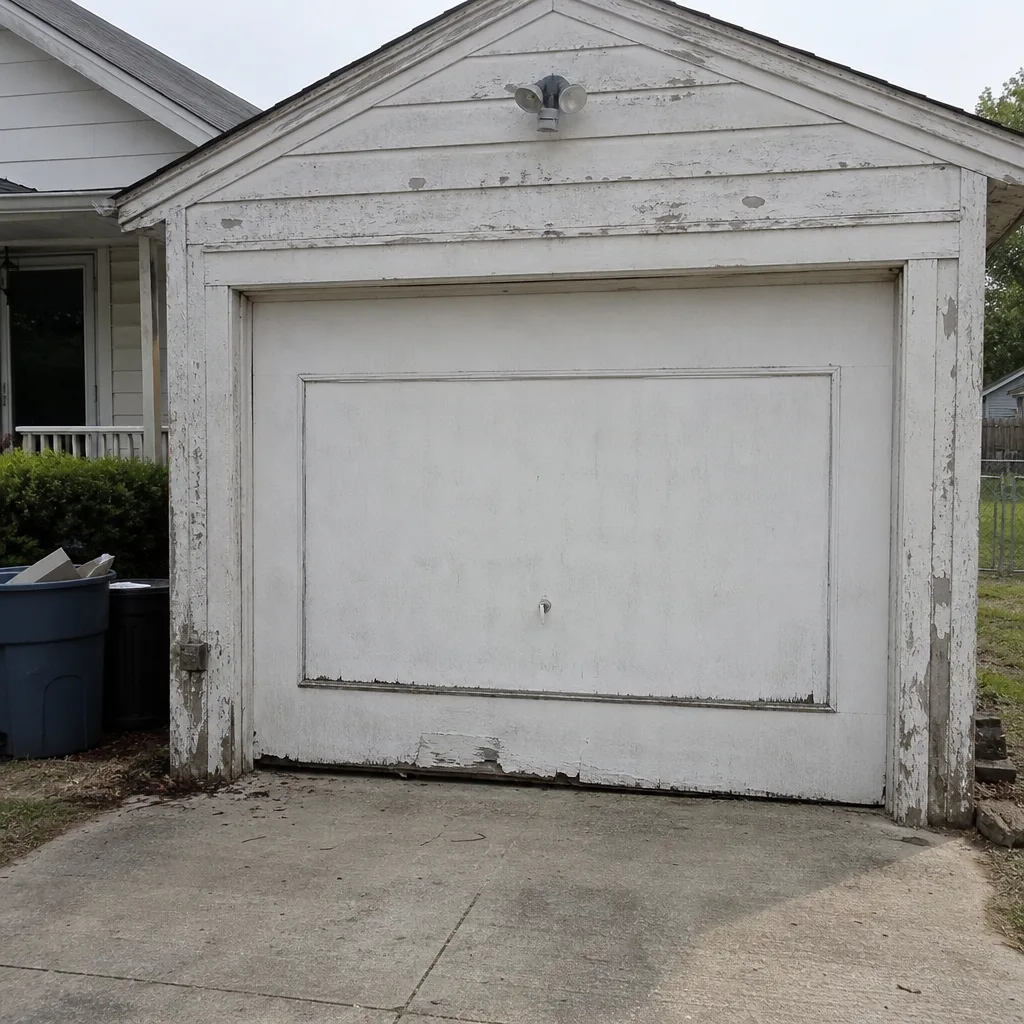 Before
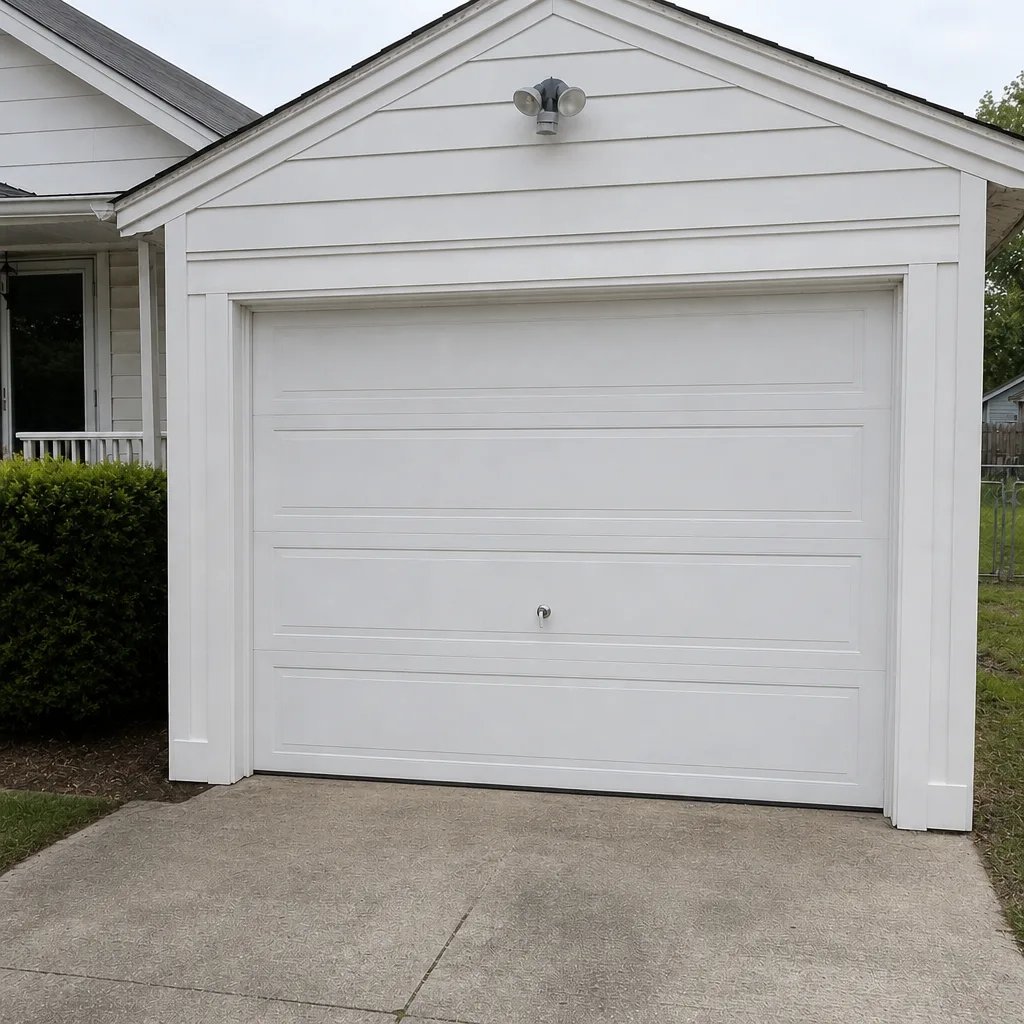 After
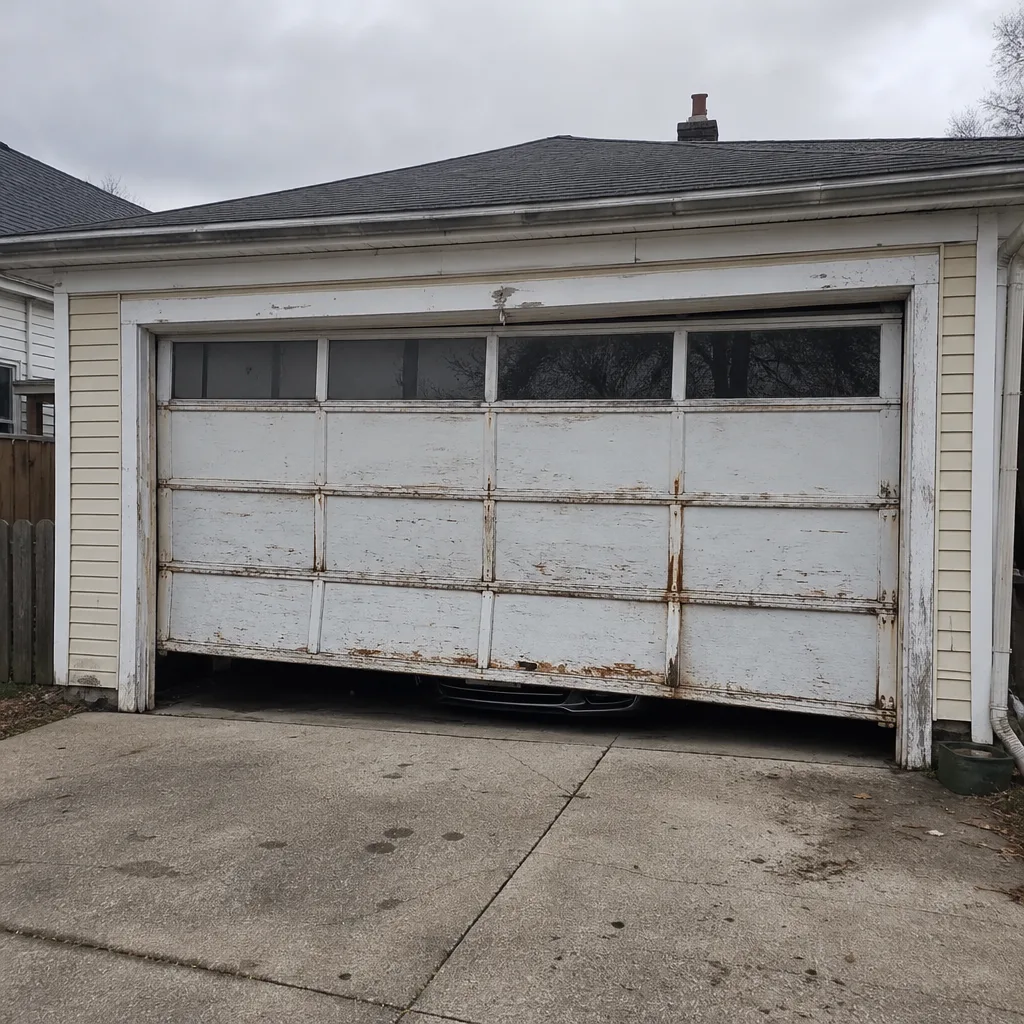 Before
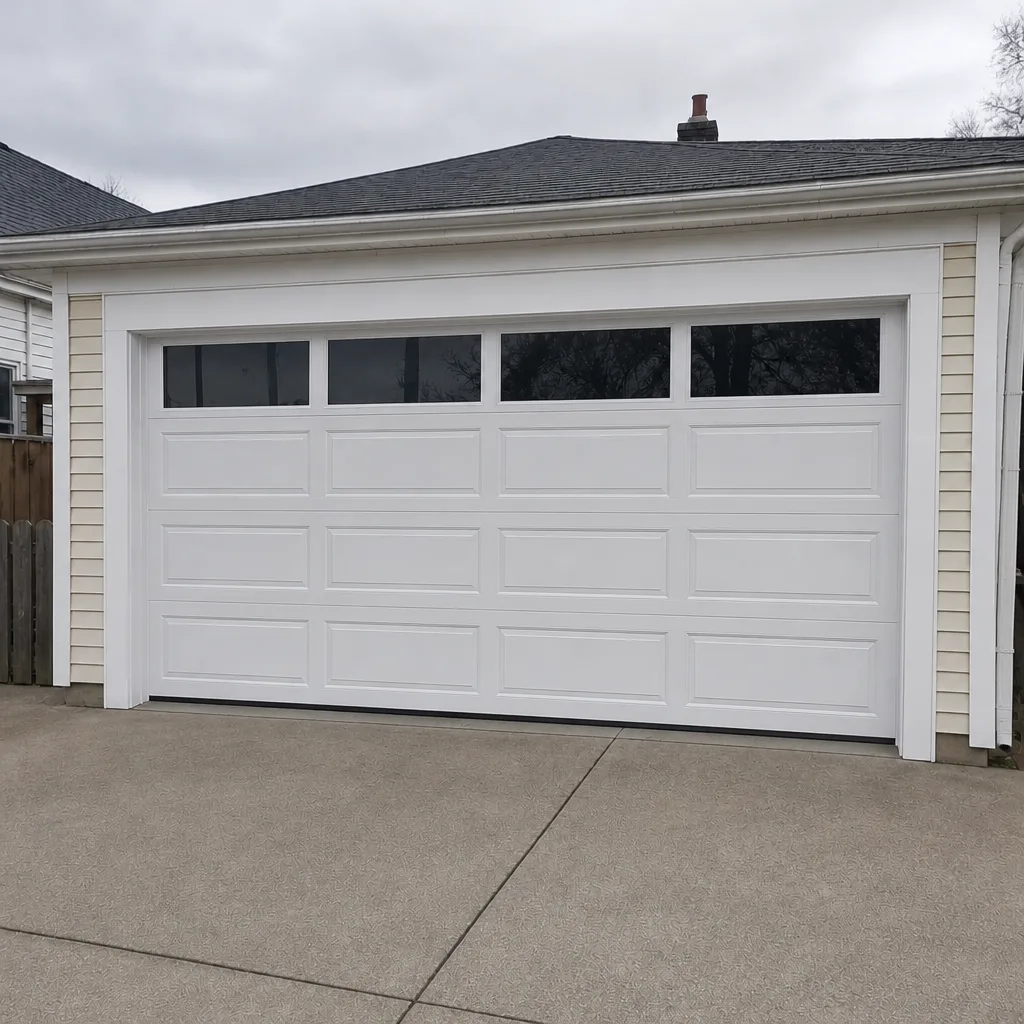 After
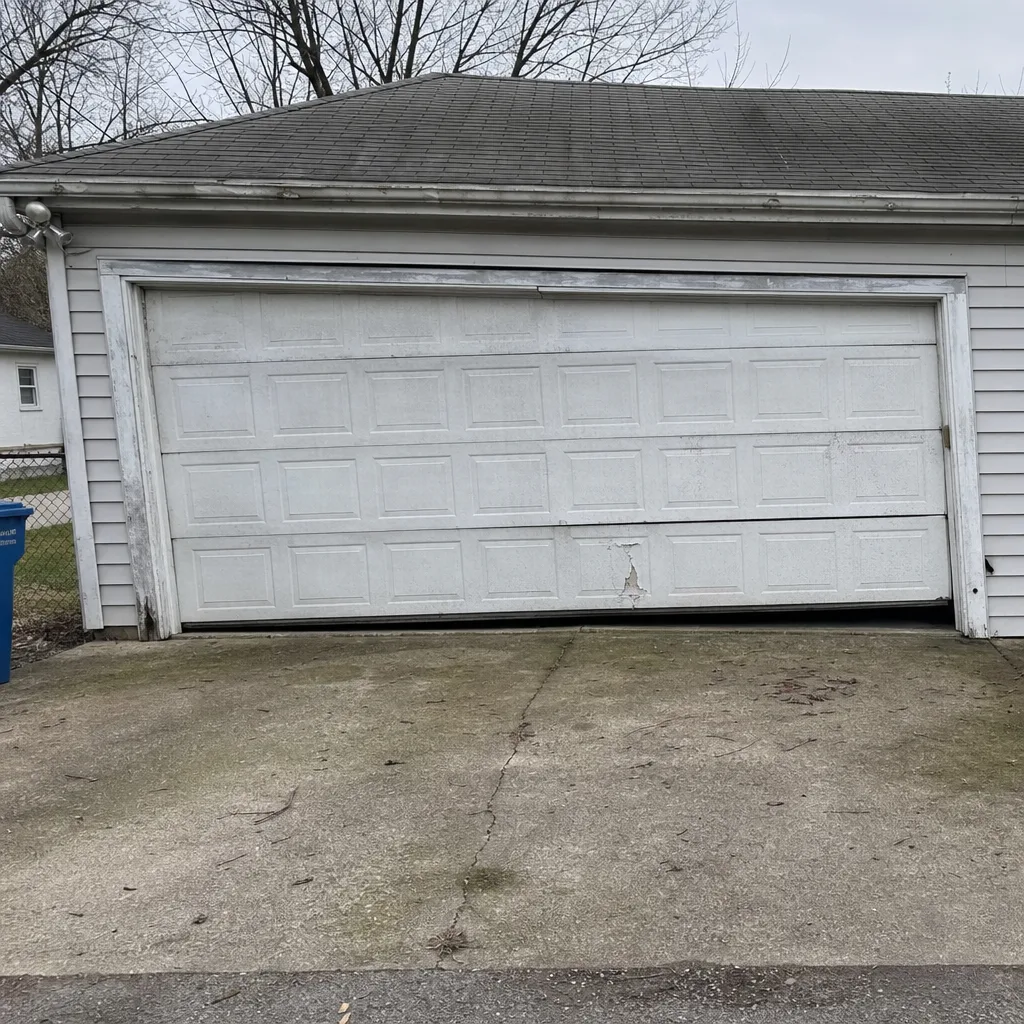 Before
 After
When to Call a Professional
Call a professional for any of these: a broken or suspicious spring, a door that reverses immediately, a loud bang from the garage, an opener that clicks without moving, a frayed or slack cable, a track that’s bent or misaligned, or any job that requires the door supported under tension. Fountain Square’s older garage structures make these calls more important, not less, because soft wood and settled floors turn small jobs into structural repairs. Garage Door Repair Fountain Square offers free estimates in Fountain Square. Call (877) 335-6376 and we’ll tell you exactly what the job involves before any work starts. The price is quoted and agreed before we begin.
Frequently Asked Questions
No. Torsion and extension springs store enough energy to cause serious injury, and both require specialized winding tools plus a specific release sequence that takes training to do safely. No DIY video changes that physics. Call (877) 335-6376 for a free estimate instead.
Spring repair typically runs $180 to $340 for one torsion spring and $150 to $280 for one extension spring, and a matched pair is usually replaced together, so a pair runs about twice the single-spring cost. The written estimate sets the final price. Call (877) 335-6376 for an exact quote.
We’re closed Saturday and open Sunday through Friday, 7am to 7pm. If your door fails on a Saturday, call and we’ll book you for Sunday. Call (877) 335-6376 to get on the schedule.
Yes, for many repair calls. Spring, opener, roller, and cable jobs are often same-day, and parts supply is part of the service, so a same-visit fix is possible when the part is on hand. Call (877) 335-6376 early in the day for the best availability.
No. The price is quoted and agreed before any work starts, and the written estimate sets the final price. If the job turns out to be different than described, you’ll hear about it before anything is done. Call (877) 335-6376 for a free estimate.
The local pro is licensed and insured as their state requires. Our technicians have up to 12 years of experience, and they’re factory-familiar with the eight most common residential door and opener brands. Call (877) 335-6376 to book a visit.
The Bottom Line
The DIY-versus-pro question isn’t about skill. It’s about stored energy. For Fountain Square homeowners, maintenance, seals, lubrication, and safety checks are worth doing yourselves, and they’ll save you real money. Rollers, cables, and track work are a judgment call that depends on tools and the condition of an older jamb. Springs, capacitors, and any opener wiring are no-touch, no matter your experience. The honest cost math says a $180 to $340 spring repair is worth every dollar of the gap over a $30 part. Call (877) 335-6376 for a free estimate and get it done right.
Written by the team at Garage Door Repair Fountain Square.