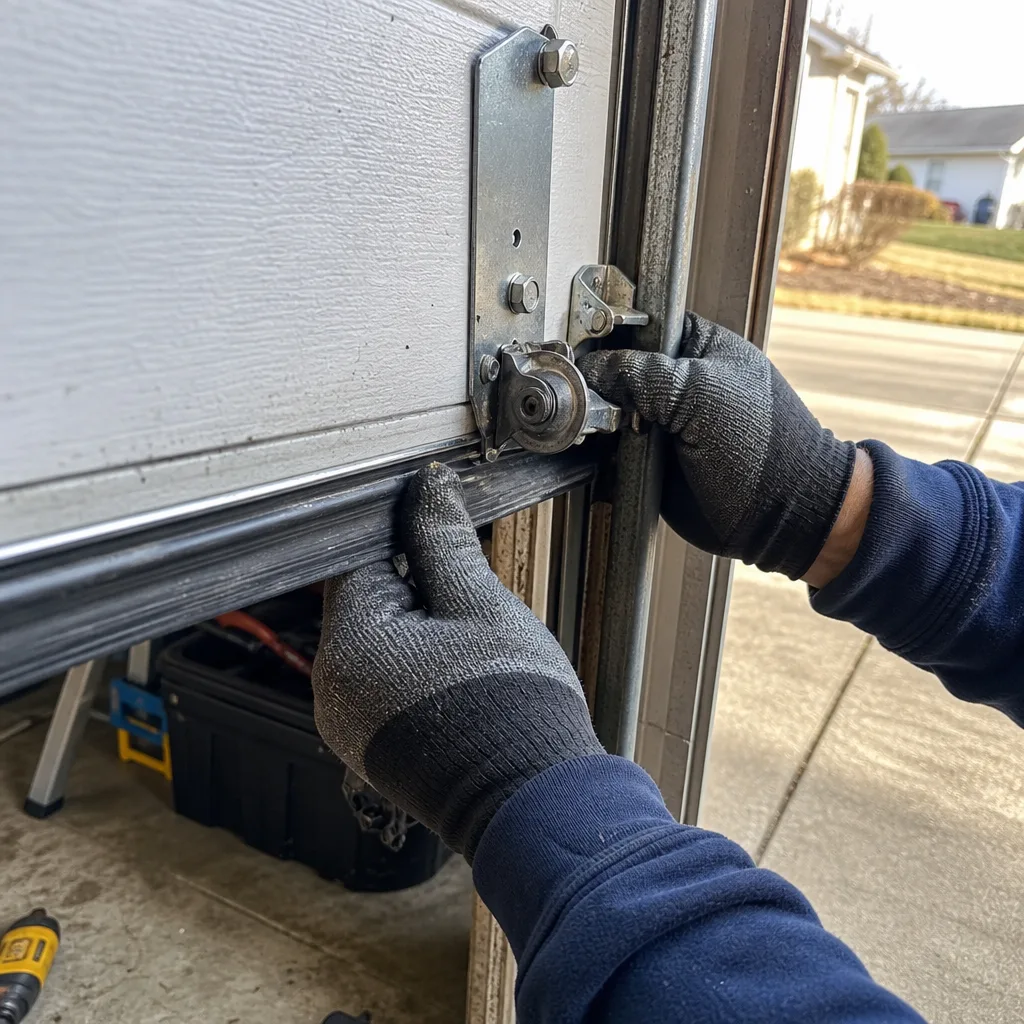
Last updated November 20, 2026
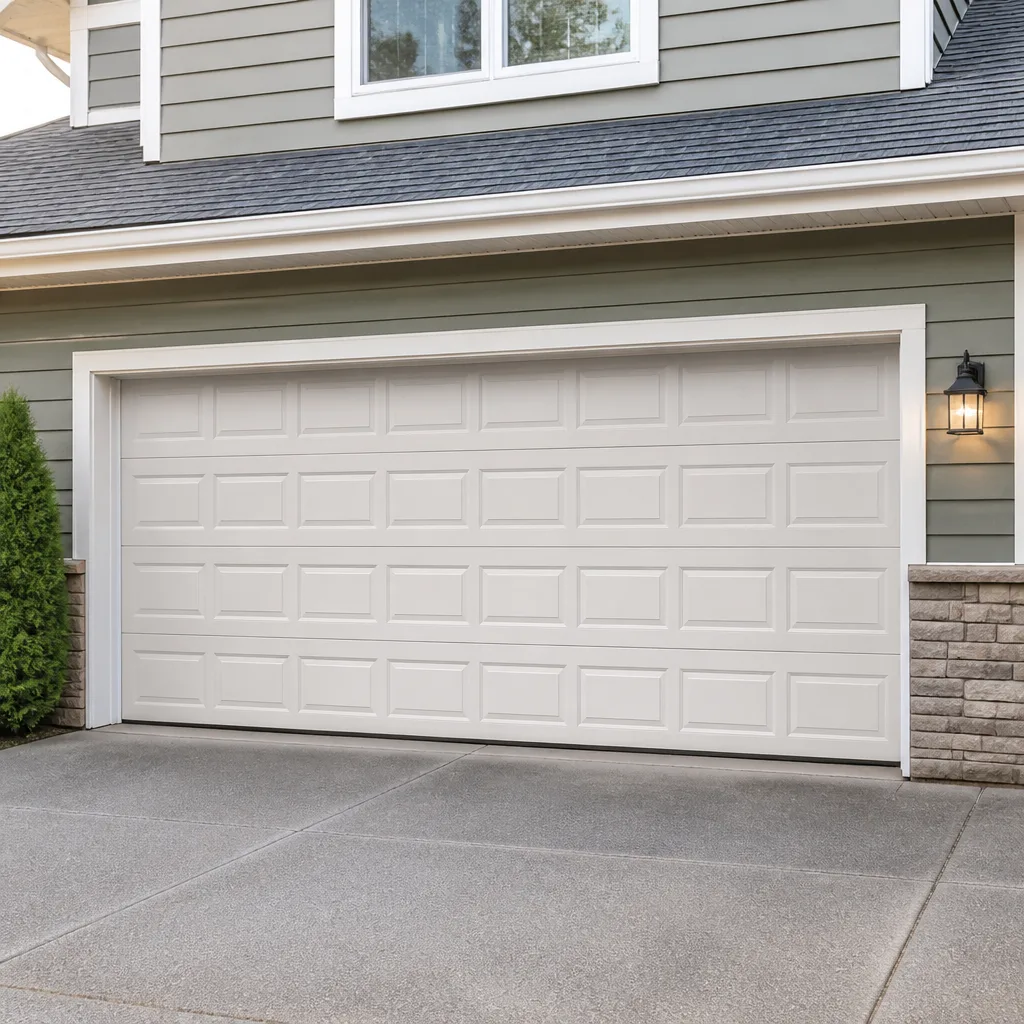 Raised-panel steel
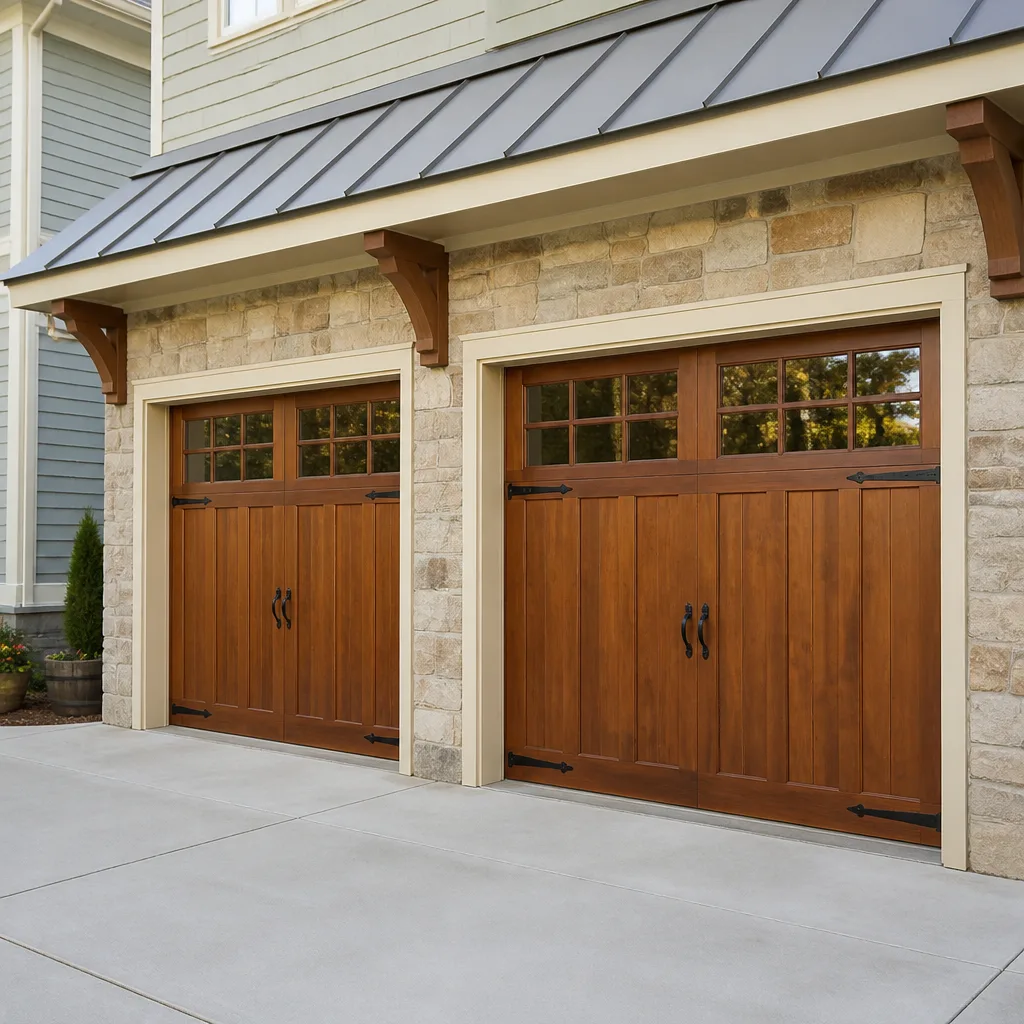 Carriage house
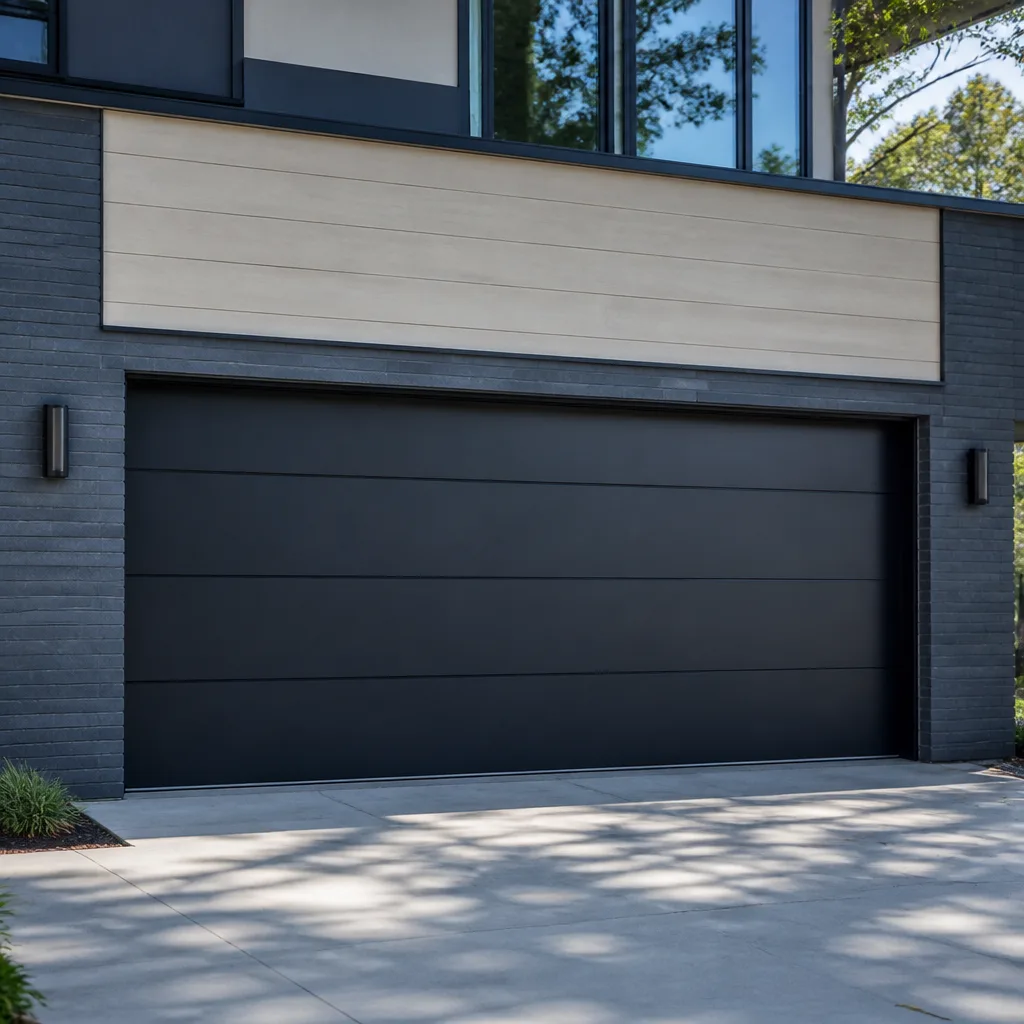 Modern flush
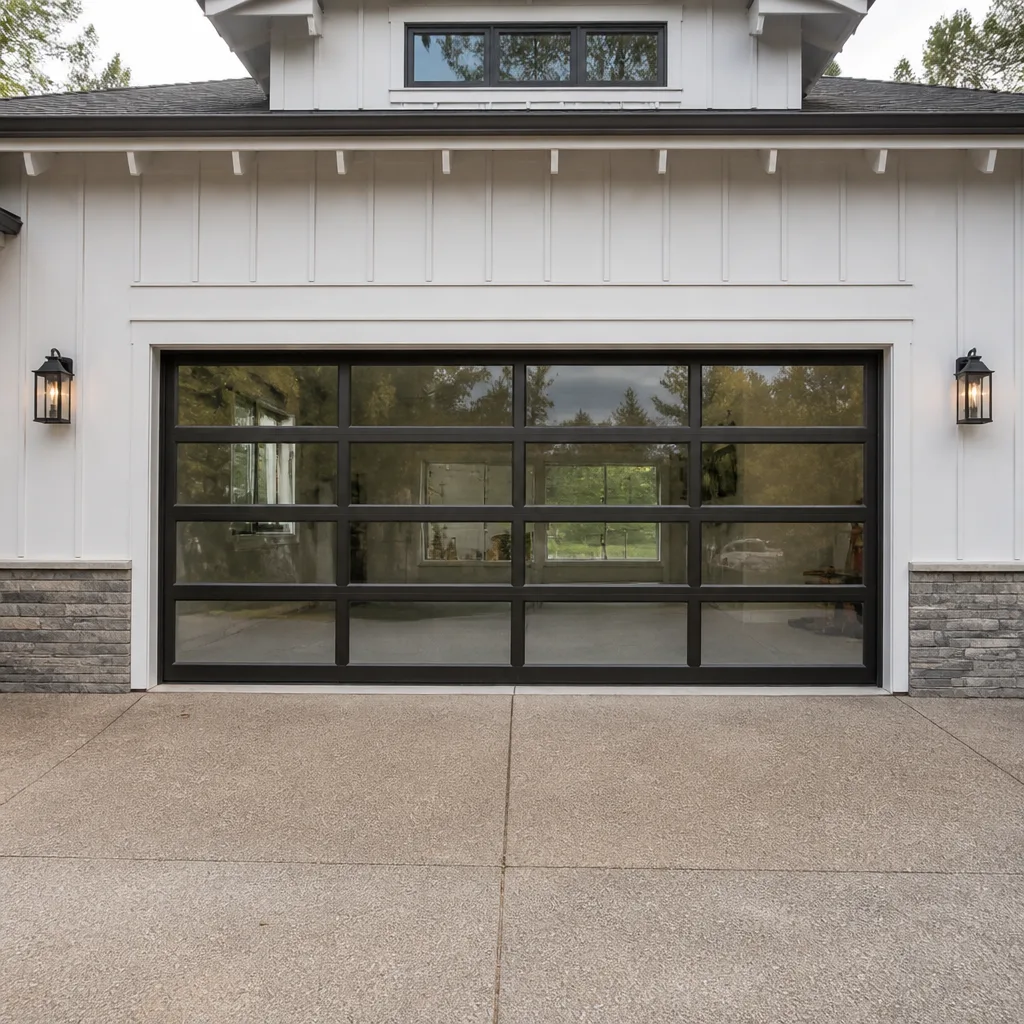 Full-view glass
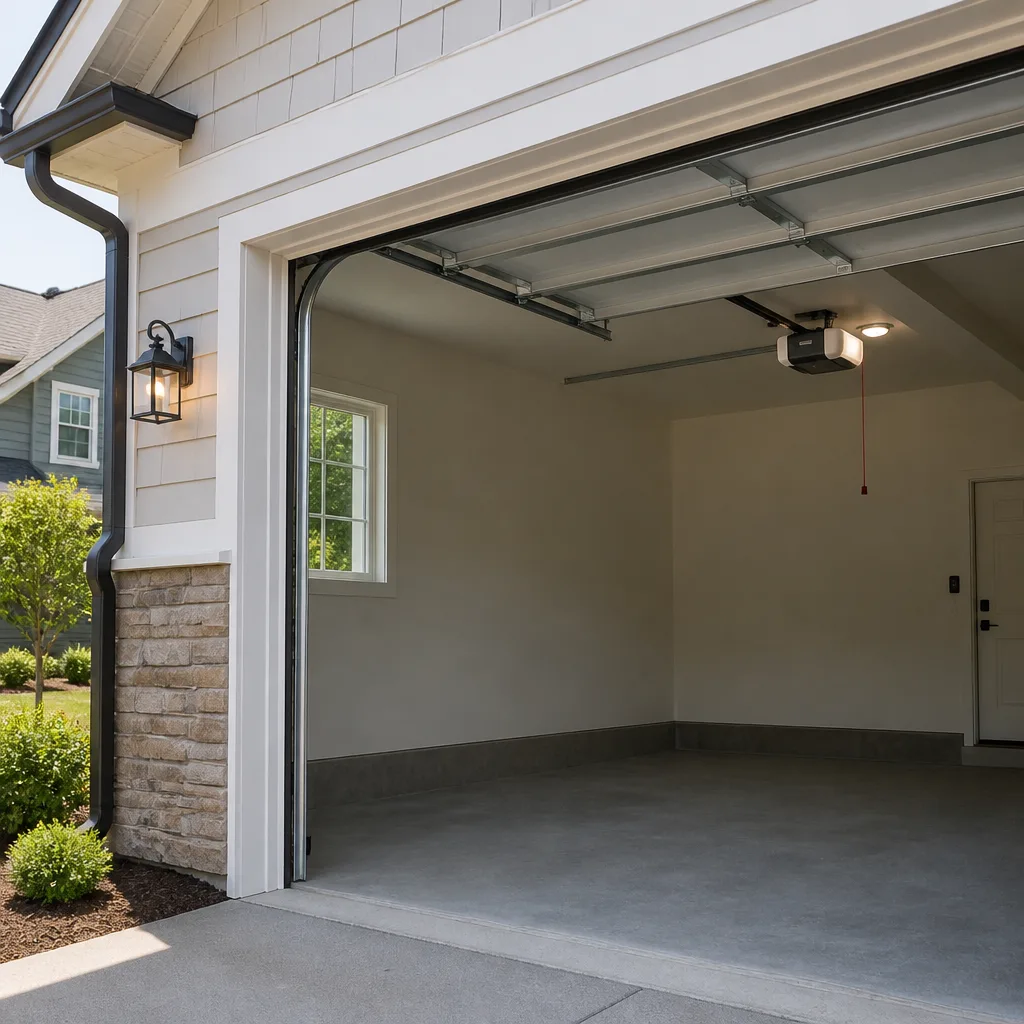 LiftMaster openers
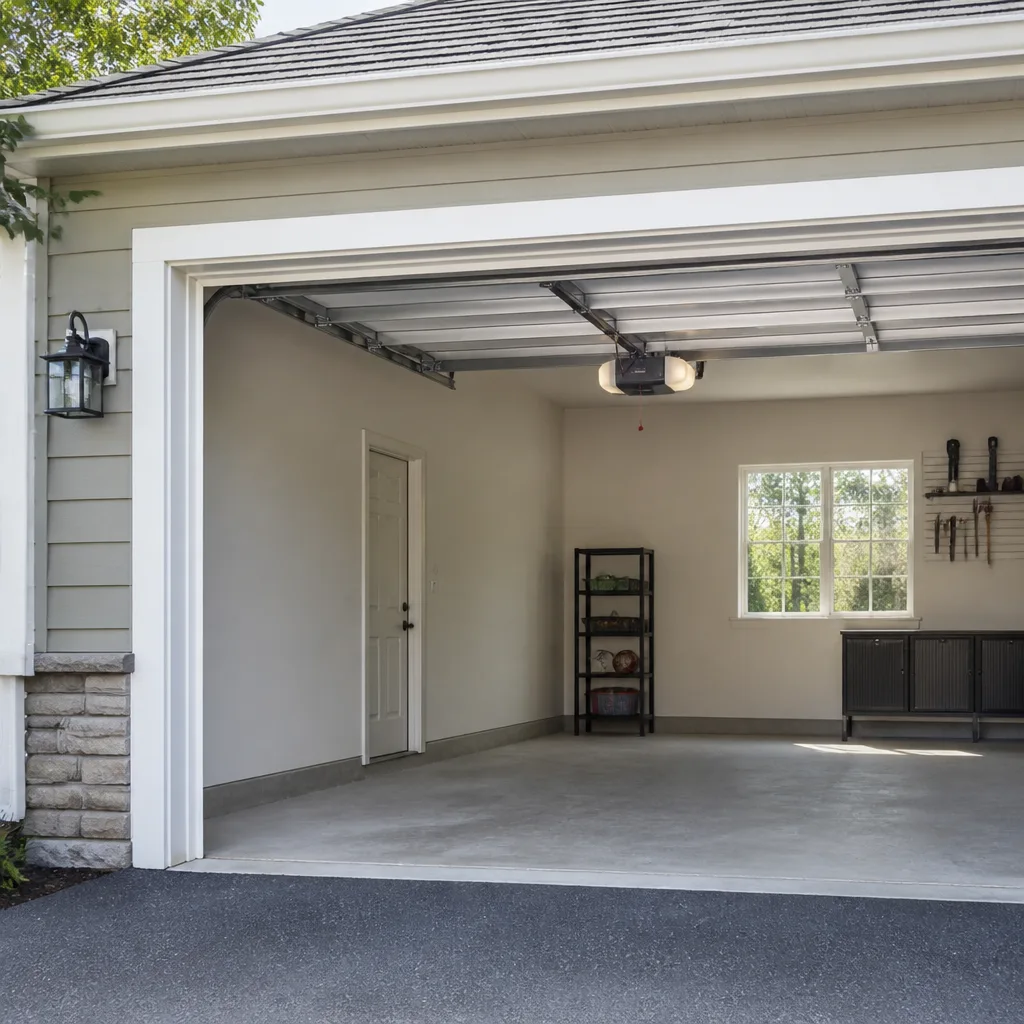 Chamberlain openers
Full 25-point door and opener safety check with every visit - springs, cables, rollers, tracks, and your LiftMaster or Chamberlain opener included
You get a price before we start. It does not change when the pro arrives.
Get your free estimateThe Complete Guide to Garage Doors in Fountain Square
Most Fountain Square garages were built before automatic openers existed. That single fact breaks the standard “just pick a door” advice the moment you measure the opening. A century of alley-facing carriage houses, converted two-flats, and narrow urban lots means the door that drops neatly into a modern suburban opening often won’t fit here without work: a header that needs adjusting, a track that won’t line up, or a wood jamb that won’t hold a lag bolt. This guide walks through what Fountain Square homeowners actually face, from tight alley clearances to freeze-thaw cycles that punish the wrong material. You’ll learn how to size a door for a non-standard opening, which materials survive an Indiana winter, and how to tell a full-service installer from a parts counter.
Quick Answer
Garage doors in Fountain Square require extra care at the measuring stage because many homes predate 1960 and have non-standard or undersized openings. Getting the door, track, and jamb right matters more than the door style itself, and working with a specialist who carries parts and handles both repair and installation saves weeks of waiting. If you’re unsure where to start, measure the opening first, then let a technician confirm what will fit.
Styles & brands we work with
- Raised-panel steel
- Carriage house
- Modern flush
- Full-view glass
- LiftMaster openers
- Chamberlain openers
Table of Contents
- Why Fountain Square Openings Aren’t Standard
- How Non-Standard Opening Sizes Affect Door and Track Selection
- Alley-Access Garages and Urban Lot Layout
- Door Materials That Handle Fountain Square’s Freeze-Thaw Cycles
- Full-Service vs. Parts-Only Installers
- Brand Availability and Local Parts Stocking
- Openers and Smart-Home Systems in Fountain Square Homes
- What to Check and When to Call
Why Fountain Square Openings Aren’t Standard
Fountain Square was developed before the two-car garage became the default, and it shows in the housing stock. The neighborhood’s bungalows and converted two-flats were built with single-bay garages and service doors that served a different era of car ownership. When those structures were modernized, many were fitted by hand rather than to a factory spec. A technician who measures a Fountain Square opening is often measuring a decision made decades ago by a carpenter with a specific vehicle in mind.
What that means in practice is that “standard” 16-foot double doors and 9-foot singles frequently don’t apply. An opening might be 8 feet wide. A header might sit lower than the door needs to clear. The side jambs might be narrower than a modern track expects, or the ceiling might be low enough that a standard torsion bar won’t fit with the door raised.
Three problems we’ve seen repeatedly in Fountain Square garages:
- Undersized openings that need a custom-width door rather than a stock unit.
- Framing that assumes a swing-up or slide door, not a sectional.
- Aging wood jambs that have dried out and no longer hold lag bolts cleanly.
None of these are deal-breakers, but each one changes the scope of the job. The right approach is to have the opening measured and photographed before anyone quotes a door, because the door that fits a 2020 build won’t necessarily clear a 1935 header. If you already know you need service and not a full replacement, our team handles Garage Door Repair Fountain Square with the same measure-first discipline.
How Non-Standard Opening Sizes Affect Door and Track Selection
Door size drives track size, and track size drives every other decision. In Fountain Square, where a lot of openings fall outside the standard range, the sequence matters. A technician measures the rough opening, checks plumb and level on the jambs, looks at headroom above the door, and confirms the clearances on the sides before a section width or track radius is chosen.
Here’s how a thorough measure-first process looks:
- Measure the rough opening at its narrowest point, not its widest. Uneven framing will grab a door that’s sized to the widest measurement.
- Check for plumb and level. Old jambs warp, and a door that fits a level frame won’t fit a warped one without correction.
- Note headroom and side room. Standard torsion setups need headroom a lot of Fountain Square garages don’t have. Low-headroom track or a low-clearance operator solves this.
- Confirm the track radius. A 12-inch radius track works in tight spaces; a 15-inch radius is smoother for taller doors. Which one you get depends on the ceiling.
- Verify the jamb will hold fasteners. If the wood has rotted or dried, jambs get reinforced before a new track is mounted.
Skipping any of these steps is how a replacement job turns into a two-visit project. Getting them right on the first visit is why the choice of installer matters so much. When your opening needs structural prep, you want garage door installation that treats the frame as part of the work, not an afterthought.
Alley-Access Garages and Urban Lot Layout
Most Fountain Square garages open onto an alley, not a driveway. That changes the job. An alley-facing garage means the door carries the full footprint of the vehicle approach, and clearances are tighter than what a suburban driveway allows. A door that swings out, or a track that intrudes into the drive path, becomes a problem the neighborhood produces more of than most areas do.
What to think about with alley-access garages in Fountain Square:
- Track projection: A door that hangs too far into the alley won’t leave enough room to back in. Sectional doors that raise vertically are usually the right call; tilt-up doors can eat the clearance.
- Alley grade: A slope in the alley floor affects the bottom seal. If the door seals against a sloped floor, it either gaps or drags. A bottom seal matched to the actual grade solves it.
- Low header: Original alley-garage headers are often lower than a modern door’s rail. A technician picks the door height around the header, not the other way around.
- Close quarters to neighbors: A door that bangs against a shared wall or fence on the up-travel needs the travel limit set precisely. Setting it correctly on install prevents damage later.
- Security and lighting: Alley-side doors get less line-of-sight, so an opener with a built-in light and a sealed bottom section is worth having.
A lot of these issues show up as “the door won’t close all the way” or “the door bangs when it goes up.” They usually trace back to an install that assumed a standard lot. If you’re working through a door that’s misbehaving, our guide to garage door repair covers the diagnosis sequence.
Door Materials That Handle Fountain Square’s Freeze-Thaw Cycles
Fountain Square sits in central Indiana, where freeze-thaw cycles run hard through late winter and early spring. Water gets into a joint or seam, freezes overnight, expands, and swings back to liquid by midday. Over a few seasons, that cycle punishes wood and anything with a poorly sealed edge. Material choice isn’t cosmetic here; it’s a durability decision. We work with the major brands – Amarr, Wayne Dalton, Clopay, Raynor, and others – and the right answer depends on how the opening is framed and how much maintenance you’re willing to do.
How the main materials stack up:
- Steel: The most forgiving for freeze-thaw. Steel panels tolerate the cycle without absorbing water, and the insulation cores are sealed. Exterior finish holds up well if the bottom edge and panel seams are properly coated. Best default for a Fountain Square garage that faces an alley.
- Aluminum: Lighter and rust-resistant, but it dents. A good option for a lighter-weight door over a tight opening, less ideal in an alley where a stray bumper is a real risk.
- Wood: Beautiful, and a natural fit for a restored bungalow. Also the material that requires the most upkeep in this climate. Wood absorbs moisture at the bottom edge and at panel joints, and without regular sealing it will warp. If you go wood, budget for annual resealing.
- Composite and vinyl-overlay: A middle ground. Resists moisture reasonably well, looks like wood from a distance, and doesn’t need yearly painting. The trade-off is higher cost and less repairability.
Whatever the material, the bottom seal and the bottom panel edge are where freeze-thaw does its worst. A seal that traps water and can’t drain is the first thing to fail. Getting a door sized to a Fountain Square opening means the bottom seal meets the actual floor grade instead of hovering above it.
Full-Service vs. Parts-Only Installers
When your opening needs structural prep, a parts-only installer leaves you holding the bag. This is the single most common trap in Fountain Square, where a lot of openings require more than a bolt-on replacement. A parts counter will sell you a door sized to the opening you tell it. It won’t tell you the header is too low, the jamb won’t hold a fastener, or the alley grade means you need a different bottom seal. That gap is what turns a weekend project into three weekends of calls.
What separates the two:
- Full-service: Measures the opening, checks plumb and level, reinforces jambs where needed, sizes the door and track to the actual structure, and handles the opener too. One call, one scope.
- Parts-only: Sells a unit matched to your dimensions. Assumes the opening is square, level, and framed to hold standard hardware. Any deviation is your problem.
- Full-service with parts supply: The best of both. The installer carries common parts, which shortens a repair visit from weeks to same-visit for the routine jobs.
In our experience, the Fountain Square openings that need the most work are the ones where the original framing is oldest. That’s exactly where a parts-only path falls apart. Our team keeps the full scope in-house, from opener repair to a new door, which means you’re not coordinating two contractors. If you’re deciding between repair and replacement, garage door opener repair is often the smaller fix that buys time before a full install.
Brand Availability and Local Parts Stocking
Waiting three weeks for a spring, a gear kit, or a specific opener logic board is a thing that happens when the installer has to special order everything. In a Fountain Square garage where the door is used every day, that’s a long time to park on the street. Brand fluency and parts stocking are the two things that shrink the wait.
Our technicians are factory-familiar with the eight brands that dominate residential installations: LiftMaster, Chamberlain, Genie, Clopay, Amarr, Wayne Dalton, Craftsman, and Raynor. That means when we open your garage, we’re not reverse-engineering a stranger’s system; we know how that brand’s opener carriage, torsion system, or panel reinforcements are built, and we can diagnose and repair accurately. The parts supply side is part of the same offering, so a routine fix is more likely to be a same-visit fix.
Practically, what that buys you in Fountain Square:
- A spring measurement that matches the door’s actual weight instead of a guess.
- A gear-and-sprocket kit for a Craftsman or LiftMaster opener that’s already on the shelf.
- A safe, correct replacement for a torsion tube or cable on a Raynor or Wayne Dalton unit.
- Fewer return visits, because the parts came with the technician.
Spring repair is the clearest example of why this matters. A torsion spring under load is dangerous to handle without training, and it’s a service many general handymen decline. We take it on as a core service because a specialist trade should. We don’t recommend trying to remove or adjust a spring yourself; the stored energy in a wound spring can cause serious injury. That’s a call for a trained technician.
Openers and Smart-Home Systems in Fountain Square Homes
The opener is where older Fountain Square homes meet modern expectations most sharply. An opener installed with the original door was a simple chain-drive unit with a wall button and a handheld remote. Today’s option set includes Wi-Fi openers, app control, and integration with the smart-home platforms a lot of households already run. The trick is matching the opener to a door and track that predate it.
What to consider when upgrading or repairing an opener in Fountain Square:
- Confirm headroom before choosing an opener type. Belt-drive and jackshaft openers need less headroom than a traditional chain-drive unit; a low-ceilinged garage often needs a wall-mount design.
- Match the opener to the door’s weight. A high-lift or insulated steel door needs an opener rated for it. Under-sizing the operator is how motors burn out early.
- Check the safety reverse. Every opener installed today must reverse on contact with an obstruction. If yours doesn’t, that’s a repair, not a setting.
- Choose smart features that fit your household. App control, Wi-Fi, and voice-assistant integration are the modern default in LiftMaster, Chamberlain, Genie, and Craftsman lines. Pick a system that fits your existing smart-home setup rather than one that fights it.
- Confirm the remote and wall-panel range. Old alley garages are sometimes at the edge of a Wi-Fi signal, so a strong local option or a remote with good range matters.
Opener repair and opener replacement are a big part of what we do in Fountain Square, because the opener is the part that most often fails first on an older door. Your opener, your door, our specialty – and if the opener is fine but the door is dragging, the problem may be a spring, a track, or a hinge rather than the operator itself.
What to Check and When to Call
A door that’s making noise or running slow is giving you warnings for weeks before it fails. A little routine attention goes a long way in Fountain Square, where freeze-thaw cycles compress the maintenance window. Here’s the walk-around a homeowner can safely do, plus the points where the checklist stops.
What to check yourself:
- Visual spring inspection: A gap in a torsion spring or a stretched extension spring means it’s at the end of its life. Look, don’t touch.
- Roller condition: Worn or flat-spotted rollers cause a rough, loud ride. Replacing rollers is a routine service.
- Track alignment: Look for dents or gaps where the track meets the bracket. A dented track often traces back to an alley-side bump.
- Weather seal: A bottom seal that’s cracked, split, or hanging loose lets water in and feeds the freeze-thaw problem.
- Safety reverse test: Place a piece of wood on the floor under the door and close it. The door should reverse on contact. If it doesn’t, it’s a repair call.
- Cables and brackets: Loosening at the cable drums or the bracket bolts is a sign of wear that needs a trained technician, not a homeowner fix.
The safety rule for Fountain Square homeowners: springs and cables are load-bearing components under tension. A wound torsion spring holds energy that can cause serious injury if it releases unexpectedly. Don’t try to loosen, tighten, or remove them. Call a technician. Our team treats this as a core service for exactly that reason.
Common Mistakes to Avoid
- Ordering a door before measuring the opening. In Fountain Square’s older homes, the “standard” door often doesn’t fit. Get the rough opening measured to its narrowest point first.
- Assuming the jamb is sound because the old door hung straight. Aging wood in Fountain Square garages can be dry enough that a new track won’t hold. Check the jamb before the installer mounts hardware to it.
- Ignoring the alley grade. A door that hangs correctly but seals against a sloped alley floor will gap or drag. Match the bottom seal to the actual grade.
- Choosing wood for a door with no maintenance plan. Wood is right for some Fountain Square restorations, but the freeze-thaw cycle here punishes anything that isn’t resealed annually. Go in with a maintenance commitment or consider steel.
- Calling a parts-only installer when the opening needs structural prep. A parts counter sells you a size; a full-service installer measures the frame. In an older Fountain Square garage, that gap is the whole job.
- Trying to save a spring yourself. A wound torsion spring can cause serious injury. This is one repair that belongs to a trained technician, no exceptions.
- Mismatching the opener to the door. An undermotored opener on an insulated steel door will burn out early. Match the operator to the door’s weight and headroom.
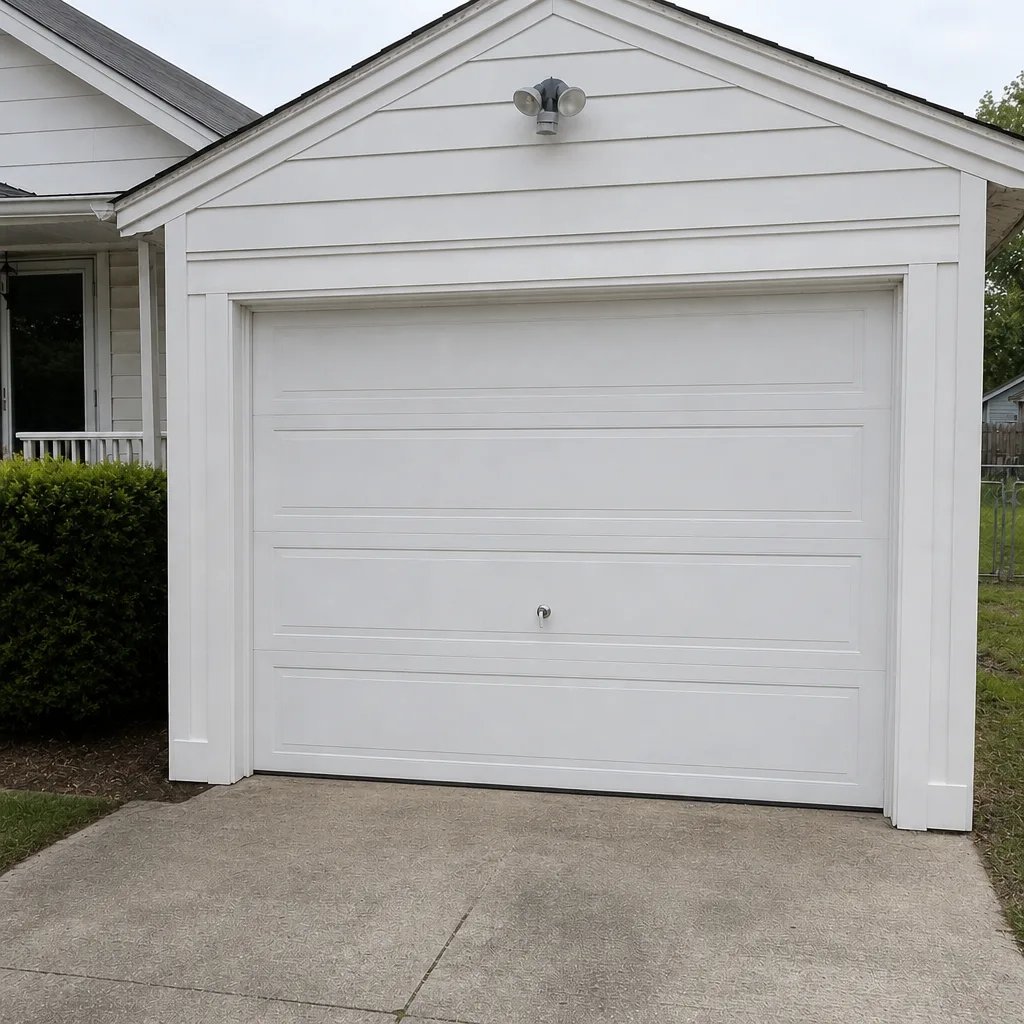
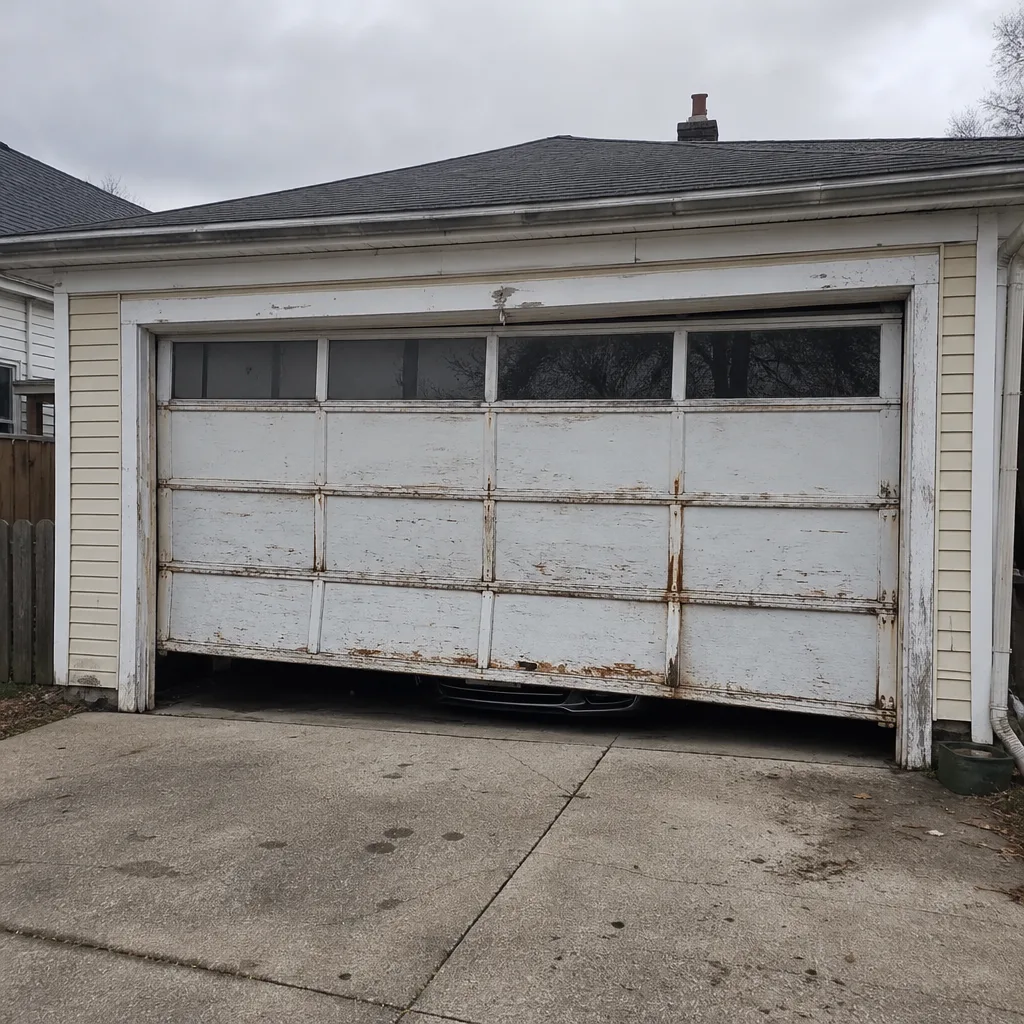
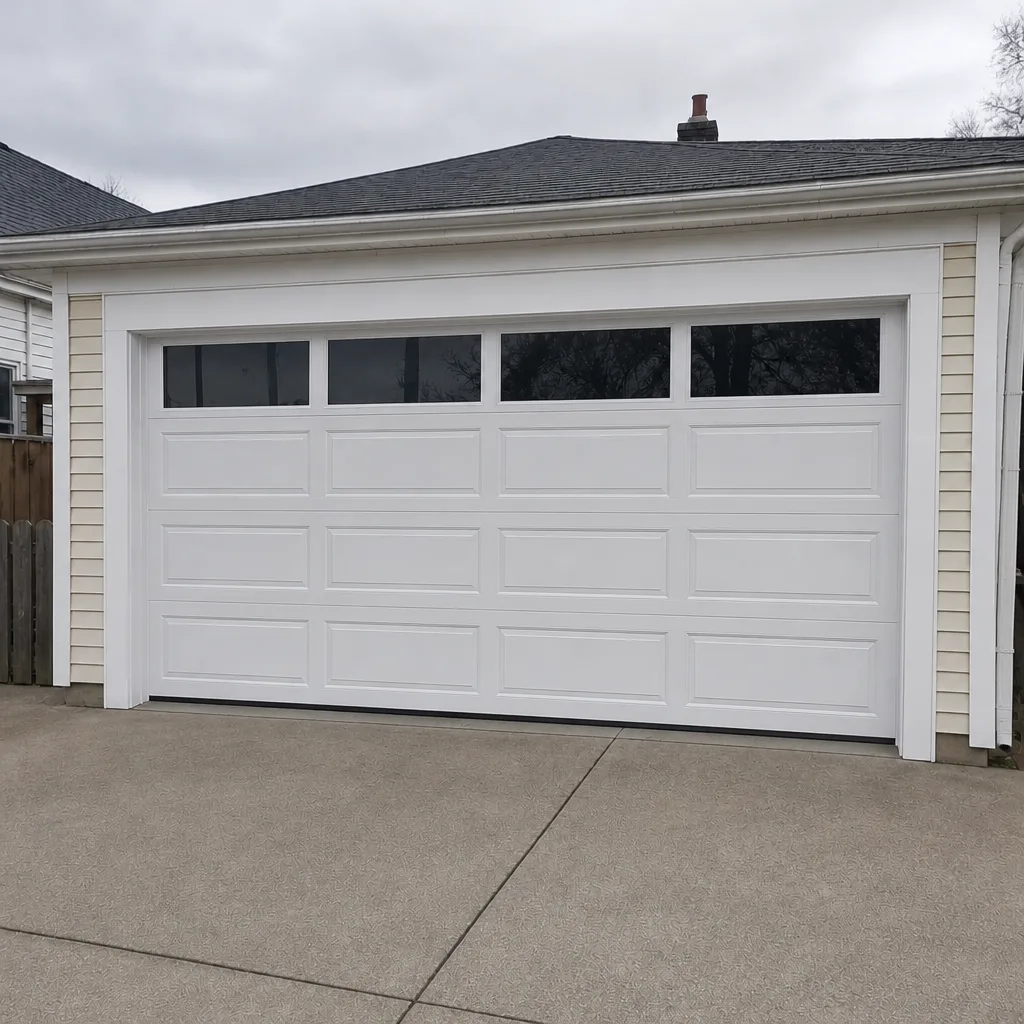
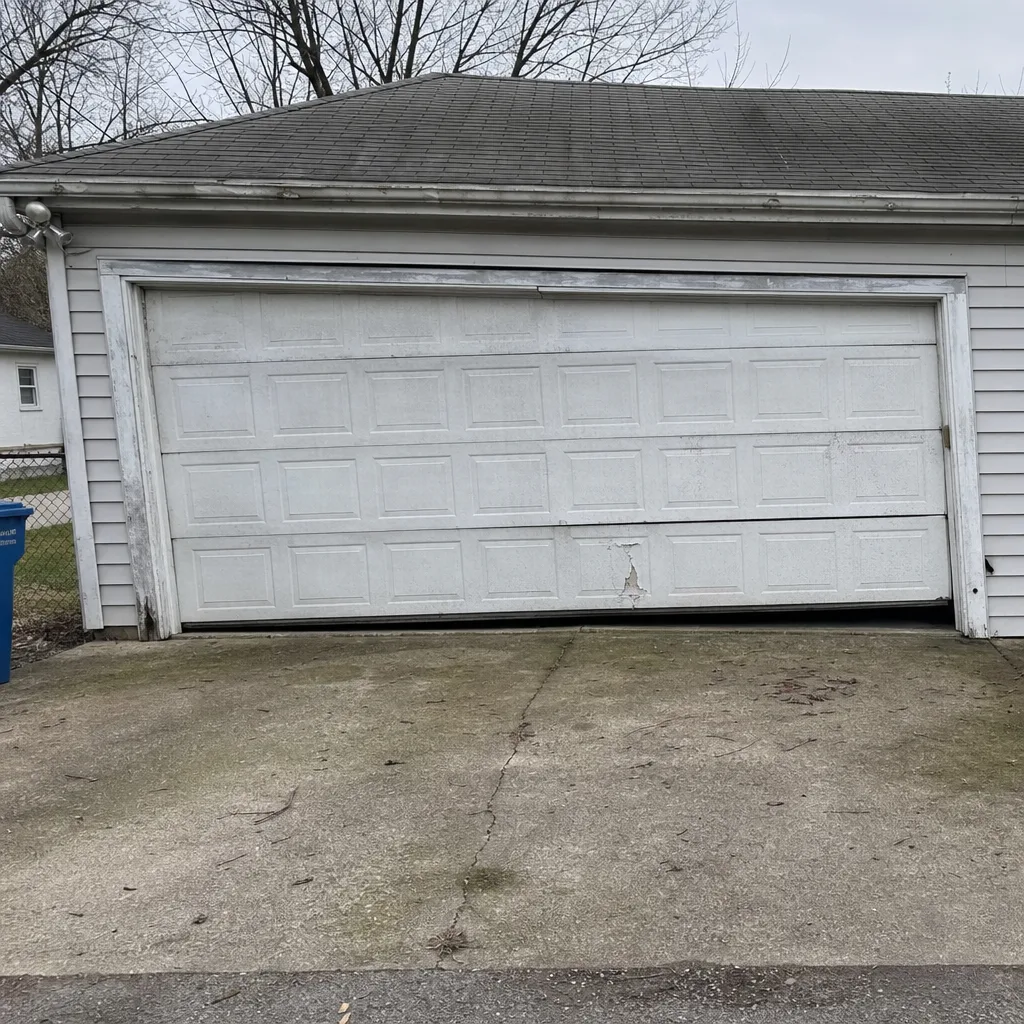
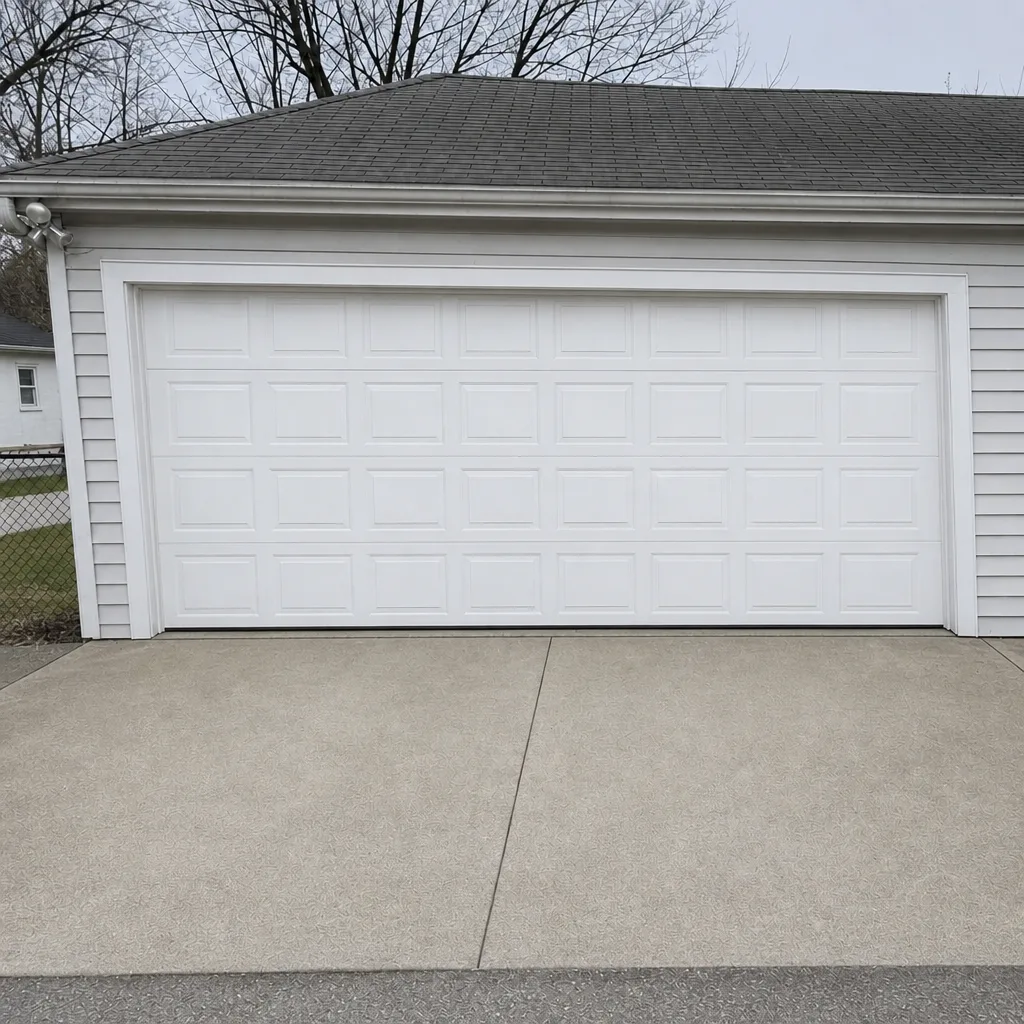
See the difference
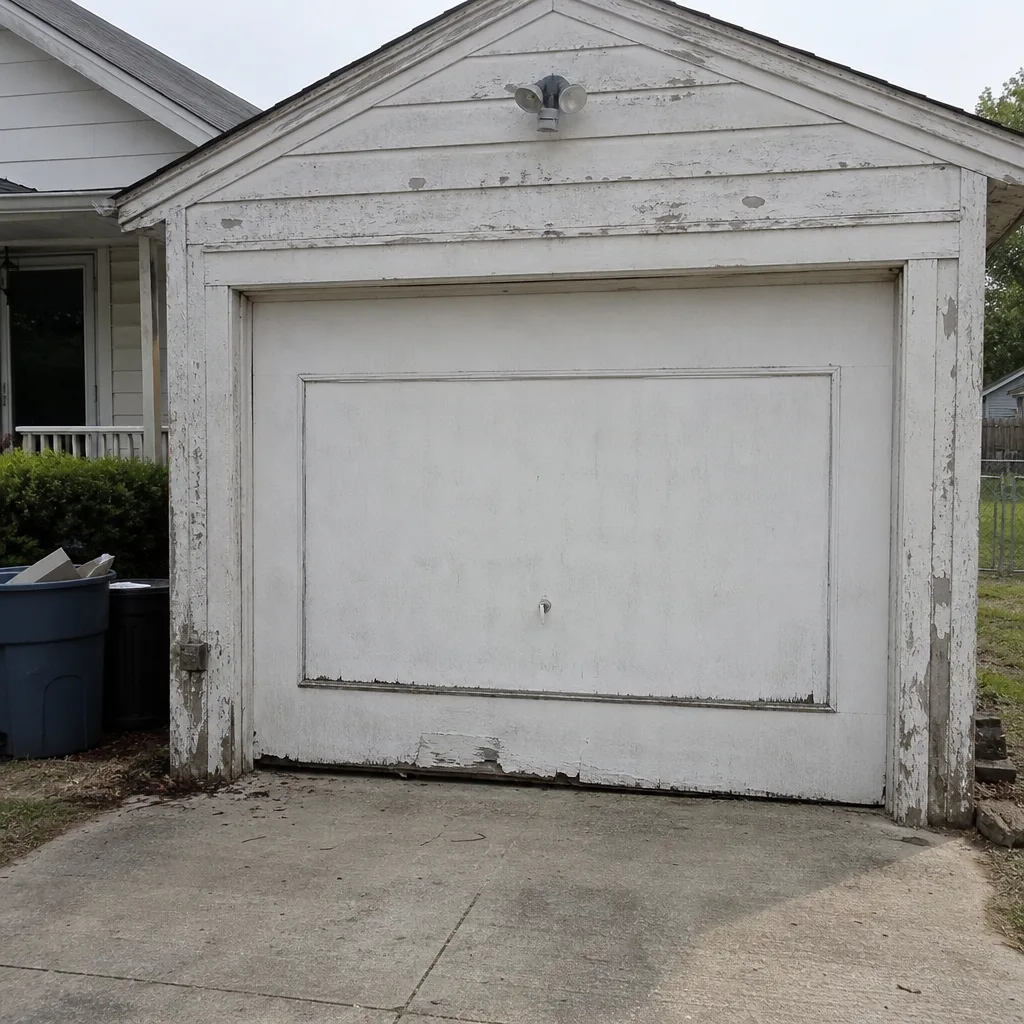 Before
 After
 Before
 After
 Before
 After
When to Call a Professional
Call a professional when the problem touches anything under tension or anything bolted into the structure. A broken spring, a snapped cable, a bent track, or a door that won’t close and needs to be forced are all calls you don’t want to make on your own. In Fountain Square, older jambs and non-standard openings mean that a “simple” fix can turn into a structural one once a technician gets into the frame. If the door is binding, sitting crooked, or the opener is running but not lifting, that’s the point to stop troubleshooting and get a trained eye. Garage Door Repair Fountain Square offers free estimates in Fountain Square – call (877) 335-6376. We’ll measure the opening, identify the actual failure, and quote before any work starts.
Frequently Asked Questions
Most garage door repairs in Fountain Square run in the low to mid hundreds of dollars depending on the part involved. A spring replacement, a set of rollers, or an opener gear kit sits within a similar range, and a full opener replacement or new door runs higher. The important part is that the price is quoted and agreed before any work starts, so the invoice matches the estimate. Call (877) 335-6376 for an exact quote – estimates are free.
Replacing only the door panel on a straightforward opening is a homeowner job in some cases, but full door replacement is not, especially in Fountain Square’s older homes. The added risk here is the opening itself – non-standard sizing, an aging jamb, or a low header means the install requires adjustment a homeowner can’t safely do. Springs and cables are strictly a technician job. Call us for a free measure and a written price.
Because many Fountain Square garages predate 1960, and their openings were built to a vehicle-era size or hand-framed to fit a specific structure. The opening is often narrower, shorter, or lower-ceilinged than the standard 16-foot or 9-foot door expects. The fix is to measure the rough opening at its narrowest point and choose a door and track matched to it. Call (877) 335-6376 for a free measure and written price.
A standard replacement on a straightforward opening takes part of a day, but a Fountain Square install on a non-standard opening can run longer if the framing needs prep. The right sequence is a measure-first appointment, a written quote, and a scheduled install. Installation work is measured, ordered, and scheduled, so it’s not a same-day call. Call (877) 335-6376 to schedule a free estimate.
We’re factory-familiar with the eight dominant residential brands: LiftMaster, Chamberlain, Genie, Clopay, Amarr, Wayne Dalton, Craftsman, and Raynor. That means we can diagnose and repair what’s actually in your garage, rather than guessing at how a given system is built. If the brand isn’t listed here, call us and we’ll let you know. Call (877) 335-6376 for a free estimate.
No, not after a written quote is agreed. We measure the opening and confirm the scope before quoting, and the price you approve is the price you pay. If the technician finds something on-site that changes the job (a rotted jamb, for instance), that’s discussed and re-quoted before any work starts. Call (877) 335-6376 for an exact quote – estimates are free.
The Bottom Line
Fountain Square garages are not the garages the standard door guides were written for. The neighborhood’s pre-1960 housing stock means non-standard openings, tight alley access, aging jambs, and a freeze-thaw cycle that punishes the wrong material. Measure first, choose a material that handles the local climate, and pick a full-service installer who carries parts and handles the structure as well as the door. Springs and cables are the one repair you never take on yourself. Get the opening measured, get a written price, and the rest of the decisions fall into place.
Written by the team at Garage Door Repair Fountain Square.